AuraAura colors9 min read
Aura color combinations: what two or three colors mean
Aura color combinations explained: what pink and purple, blue and purple, green and blue and other pairs mean, and how to read a three-color aura.
Aura color combinations are read by blending single-color meanings: the strongest color sets the theme, and the second color shapes how it shows. Pink and purple reads as compassion guided by intuition, blue and purple as calm insight, and green and blue as steady healing. These pair meanings are a modern synthesis, not science or an ancient tradition.
Most aura traditions say you can carry more than one color at once, and our guide to aura colors meaning explains each one alone. This post reads them in pairs and threes, using the palette we built into Aura, our iPhone app that turns your mood into a daily aura color. Got your colors from a photo? See how aura photography works.
What do aura color combinations mean?
An aura color combination is two or three aura colors read together as one picture of your mood. Most readers treat the strongest color as the main theme and the others as qualities that shade it. The meaning comes from blending the single colors. Pink stands for love, tenderness and compassion, and purple for spirituality, vision and insight, so a pink and purple aura reads as compassion guided by intuition. Blue (calm, honesty, expression) with green (growth, healing, balance) reads as steady, honest care. Order matters too. Blue leading pink is calm that comes out as kindness, while pink leading blue is love spoken plainly. There is no standard source that defines pair meanings, so every combination guide, this one included, is a modern synthesis of single-color symbolism. Treat a pair as a sentence about how you feel today, not a verdict on who you are.
It's worth being clear about the science. The encyclopedia entry on the aura in parapsychology says aura claims are "not supported by scientific evidence", and that in controlled experiments the ability to see auras "has not been proven to exist". So a pair meaning can't be measured, only found useful or not.
Color and feeling do share a real link in psychology, though. In 2020, the journal Psychological Science published Universal Patterns in Color-Emotion Associations Are Further Shaped by Linguistic and Geographic Proximity, a study of 4,598 participants from 30 nations speaking 22 native languages. They matched 20 emotion concepts with 12 color terms, and the researchers found universal color-emotion associations, with an average similarity coefficient of .88. That says nothing about auras, but it helps explain why a color vocabulary for feelings is easy to share.
How do you read two aura colors together?
Read two aura colors in order: the main color is the theme of the day, and the second describes how that theme shows up. Here is the method we use:
- Find the main color. The highest percentage leads. Without numbers, pick the color that looks strongest.
- Name the color family. Translate poetic names into a basic color first: coral reads as orange-pink, olive as green, orchid as purple.
- Read the main color as the theme. Use its single meaning: green for growth and balance, yellow for optimism, and so on.
- Read the second color as the style. Green with blue is balance expressed calmly. Green with orange is balance with a creative, social streak.
- Weigh the gap. Close numbers, such as 45% and 35%, suggest two themes sharing the day. A big gap means one color is doing most of the talking.
- Check it against your mood. Write one line on why the pair fits, or doesn't.
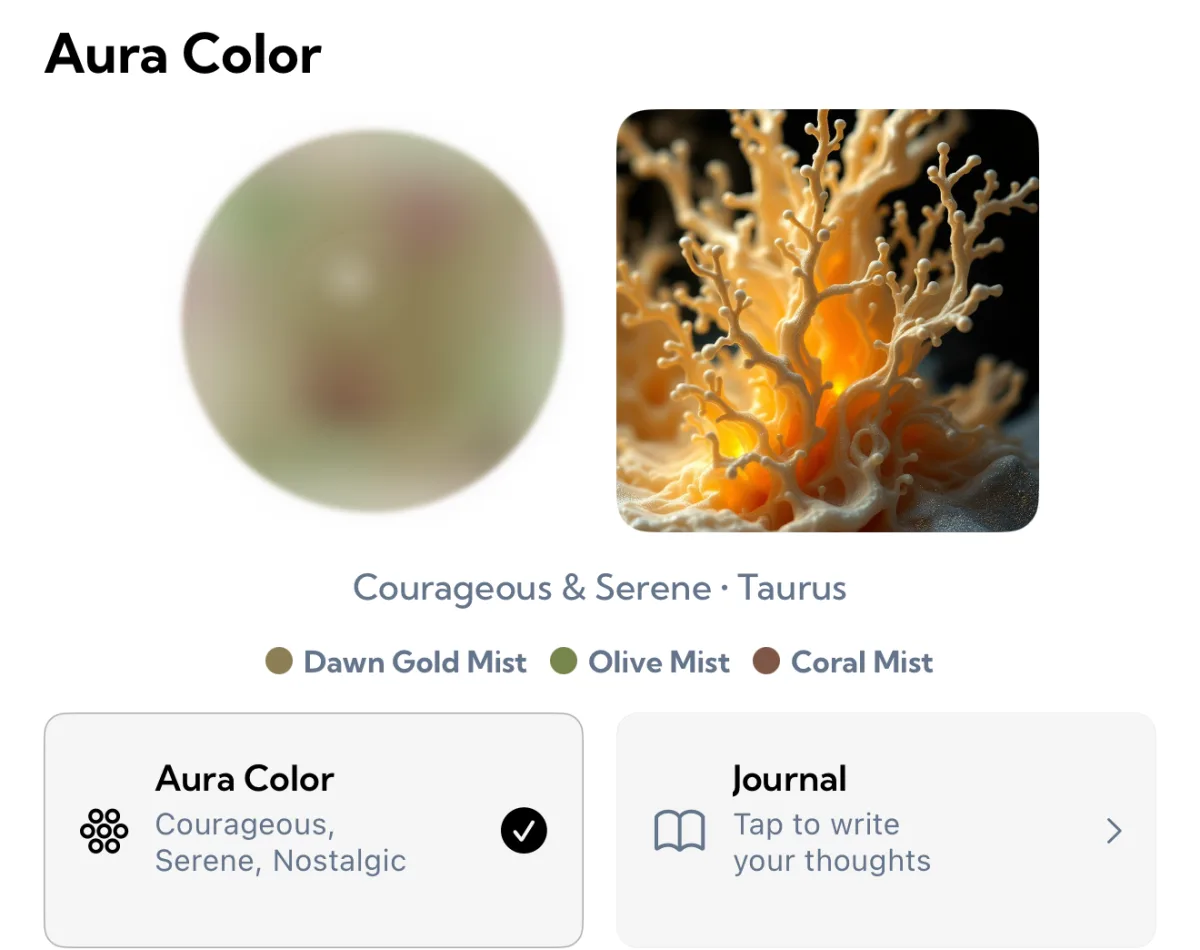
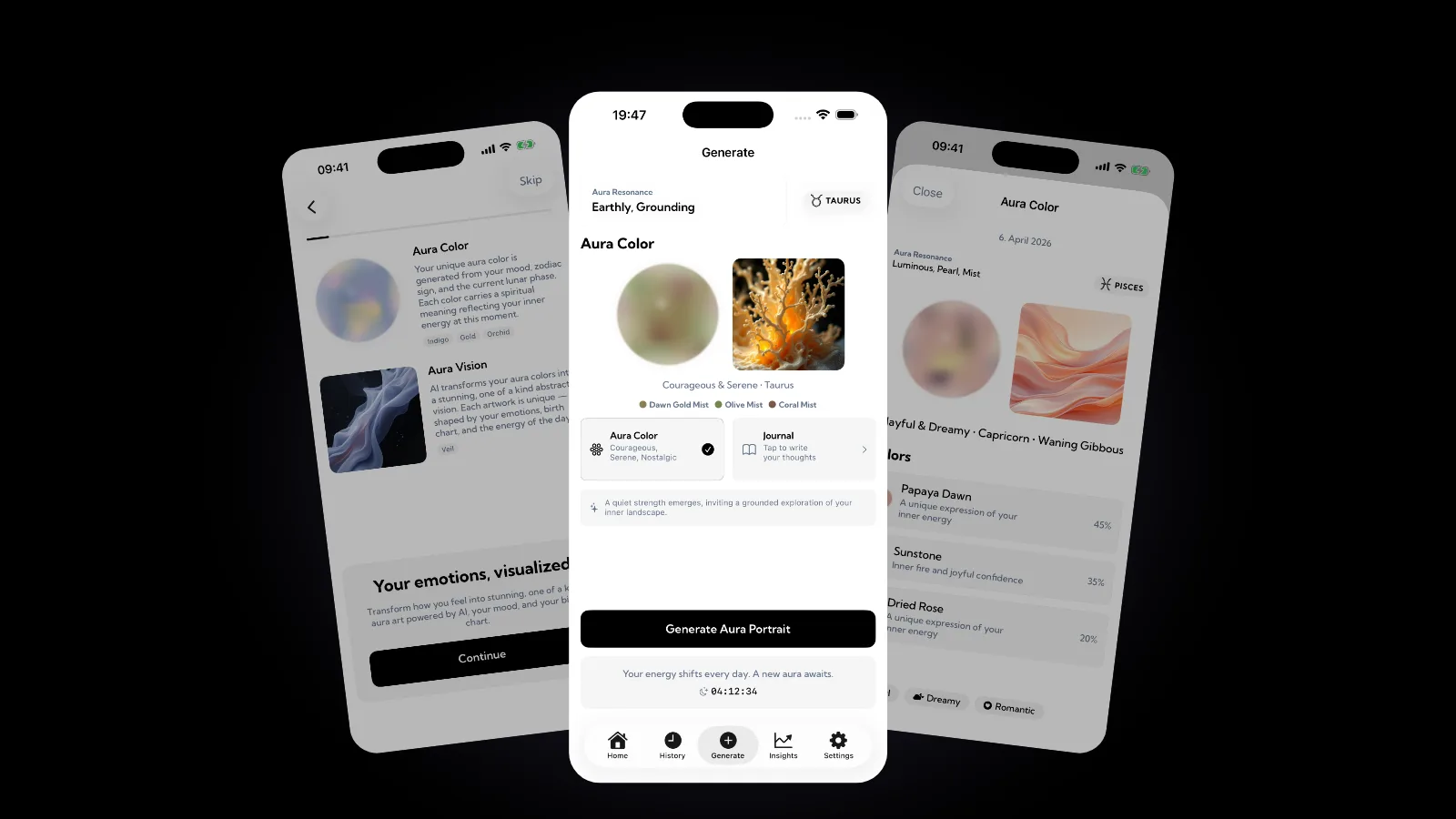
Here's how we'd read it. Dawn Gold Mist reads as gold, Olive Mist as green and Coral Mist as a muted orange-pink: purpose with a steady, healing streak, warmed by coral. That sits well with Courageous and Serene. The color families are our reading, not something the app states.
Aura color combinations at a glance
Each row blends the single-color meanings from our main guide. Lean the reading toward whichever color is stronger.
| Combination | Built from | Combined reading |
|---|---|---|
| Pink and purple | Love, tenderness + spirituality, vision | Compassion guided by intuition |
| Blue and purple | Calm, honesty + vision, insight | Calm insight, a thoughtful seeker |
| Pink and blue | Tenderness + honesty, expression | Gentle honesty, kind words |
| Green and blue | Growth, healing + calm, honesty | Steady healing, honest care |
| Yellow and pink | Optimism, curiosity + love | Playful warmth, lighthearted affection |
| Orange and pink | Creativity, warmth + tenderness | Affectionate creativity, warm company |
| Red and orange | Energy, drive + creativity | Bold momentum, ideas put into action |
| Red and purple | Drive + vision | Ambition with a sense of purpose |
| Yellow and green | Optimism + growth | Hopeful learning, a fresh start |
| Green and pink | Healing + compassion | Nurturing, caring for others |
| Gold and purple | Wisdom, purpose + spirituality | Purposeful insight, quiet guidance |
| Gray or brown with any color | Rest, grounding + that color | That color's quality, with a need for rest |
Two of these pairs also blend into single shades with their own names: blue and green make turquoise, and red with purple leans toward magenta. Our guide to rare aura colors covers those shades, along with rainbow auras.
What do pink and purple, blue and purple, and pink and blue auras mean?
Pink and purple reads as compassion with intuition, blue and purple as calm insight, and pink and blue as gentle honesty.
Pink and purple aura meaning
Pink brings love, tenderness and compassion; purple brings spirituality, vision and insight. Together they describe a caring, reflective mood: you feel deeply and want to understand why. With pink leading, it leans toward the heart: kindness that looks for meaning. With purple leading, it's a big-picture day softened by empathy.
Blue and purple aura meaning
Blue is calm, honesty and expression; purple is vision and insight. The pair reads as calm insight, a quiet, thoughtful mood. Blue leading suggests clear communication with depth behind it. Purple leading suggests a searching, inward day that still feels steady.
Pink and blue aura meaning
Pink and blue pairs tenderness with honesty. It's read as gentle, kind communication: saying true things softly. With blue leading, calm comes out as kindness. With pink leading, it's affection spoken plainly.
What do green and blue, yellow and pink, and orange and pink auras mean?
Green and blue reads as honest care, yellow and pink as playful warmth, and orange and pink as affectionate creativity.
Green and blue aura meaning
Green stands for growth, healing and balance, and blue for calm and honesty. Together they read as steady, honest care, the mood of someone who looks after others without fuss. Blended into one blue-green, it becomes turquoise, a shade our rare colors guide covers.
Yellow and pink aura meaning
Yellow is optimism and curiosity; pink is love and tenderness. The pair reads as playful warmth: lighthearted affection, an easy day. Yellow leading suggests a curious, chatty mood with a soft heart. Pink leading suggests affection that shows up as fun.
Orange and pink aura meaning
Orange is creativity and warmth, and pink is tenderness. Together they read as affectionate creativity, the mood for making something for someone or gathering friends. Orange leading leans social and adventurous. Pink leading leans gentle and close.
What does a three-color aura mean?
A three-color aura reads like a short sentence. The main color is the subject, the second describes it, and the third adds a smaller note. Read the first two as a pair, then ask what the third adds or softens. Here's a real reading from Aura.
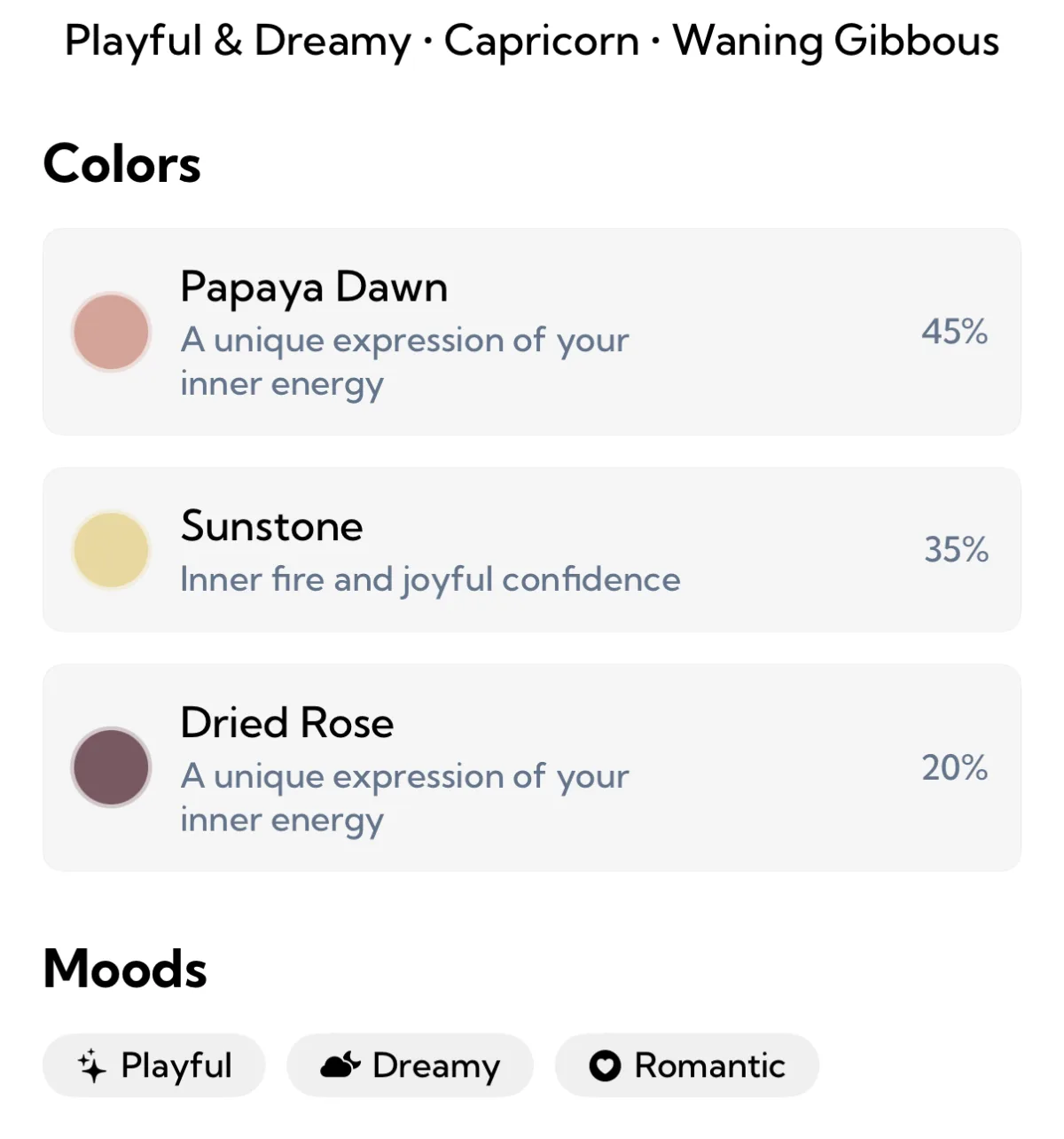
In our reading, Papaya Dawn is a soft orange-pink, Sunstone a pale yellow and Dried Rose a dusky, darker pink. So the main theme is affectionate creativity, supported by yellow's optimism and curiosity. Dried Rose adds a quieter note: love with a muted edge, since darker shades are often read as a need for rest. Put together, it says warm, playful and a little wistful. Doesn't that fit Playful, Dreamy and Romantic?
A few habits help with three colors:
- Let the top color lead. Don't give all three equal weight.
- Treat the smallest as a footnote. A 15% or 20% color tints the mood; it doesn't define it.
- Look at the families. One cool color among warm ones is worth noticing.
How does Aura show the mix of colors in your aura?
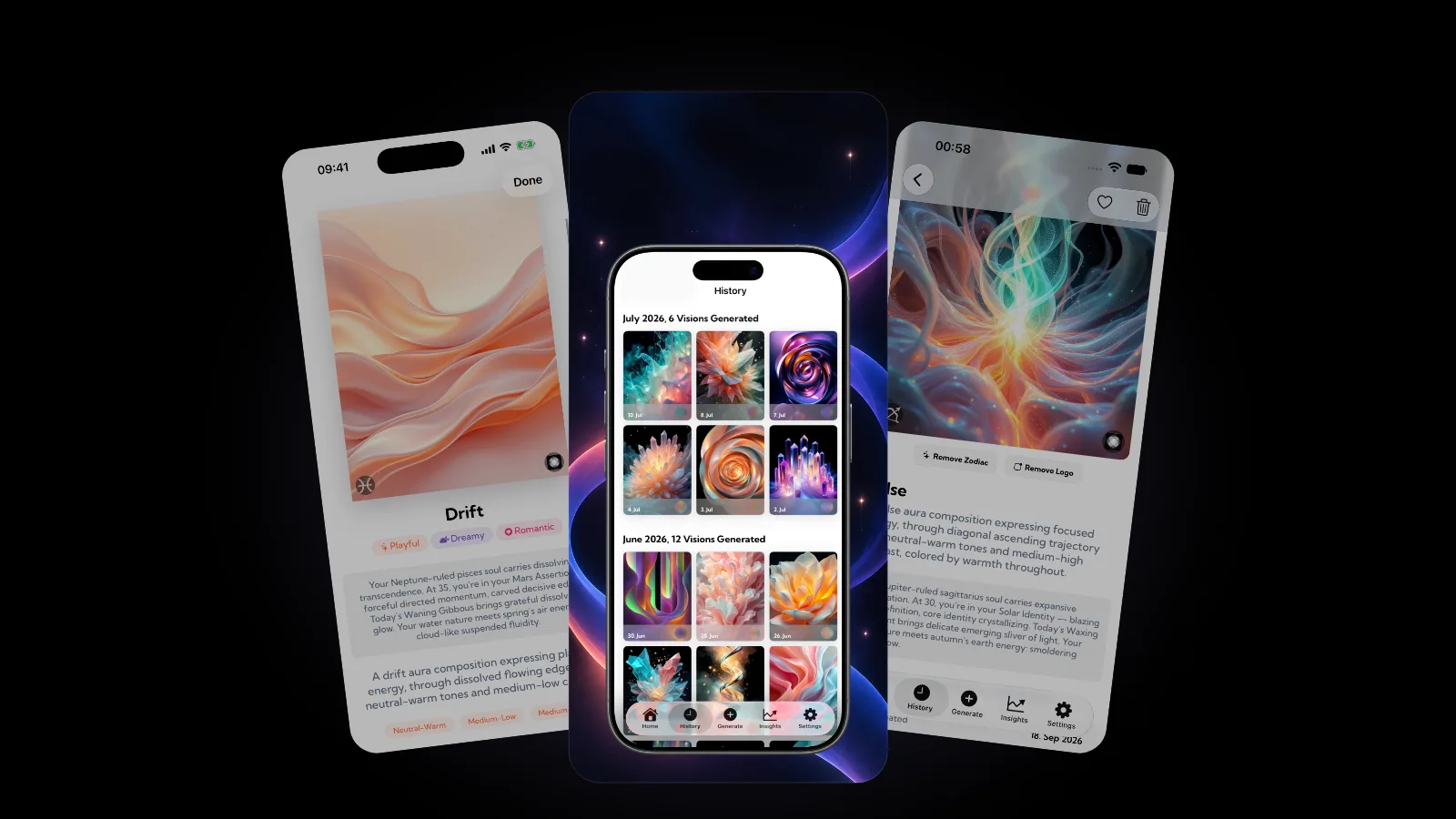
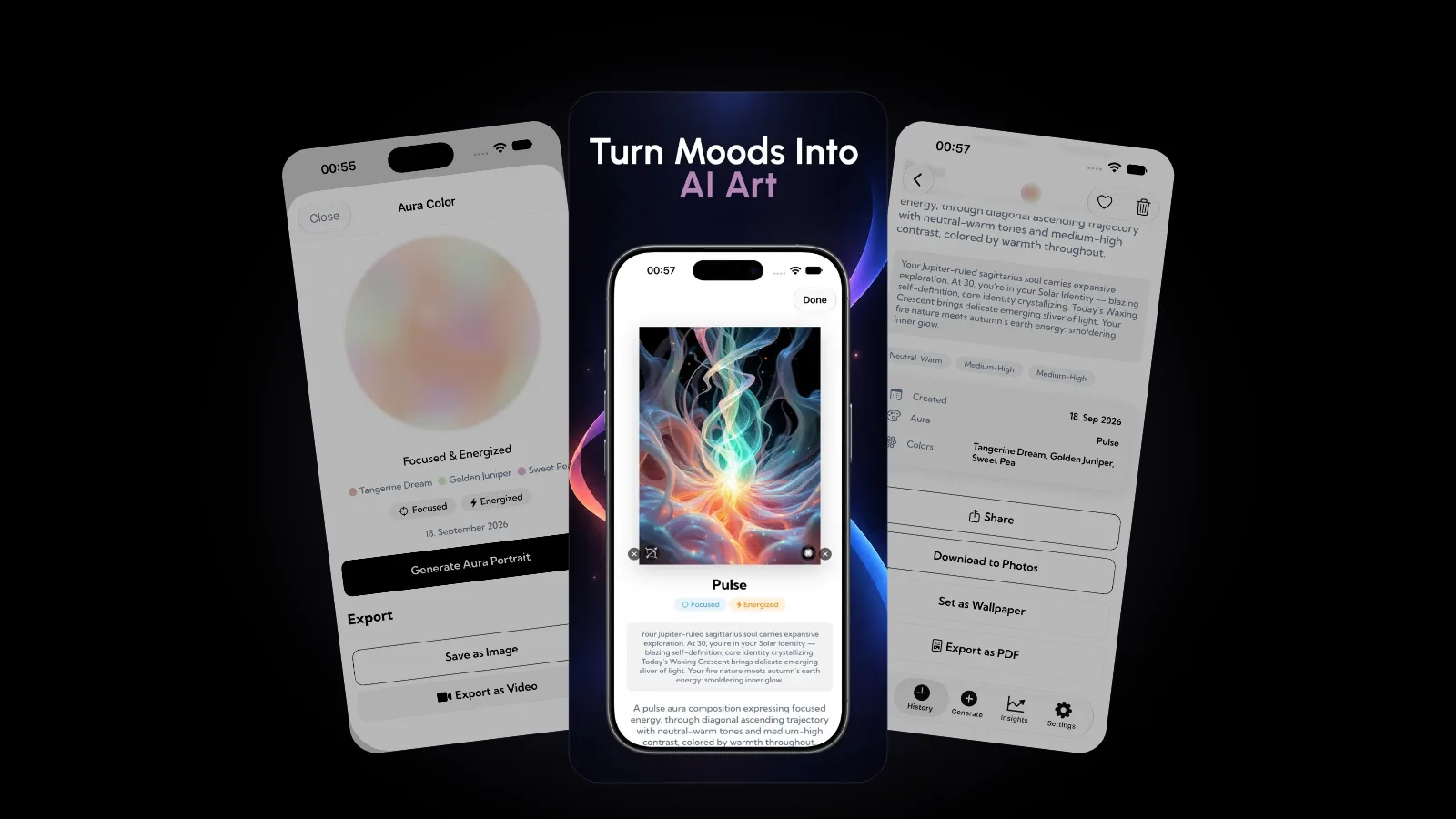
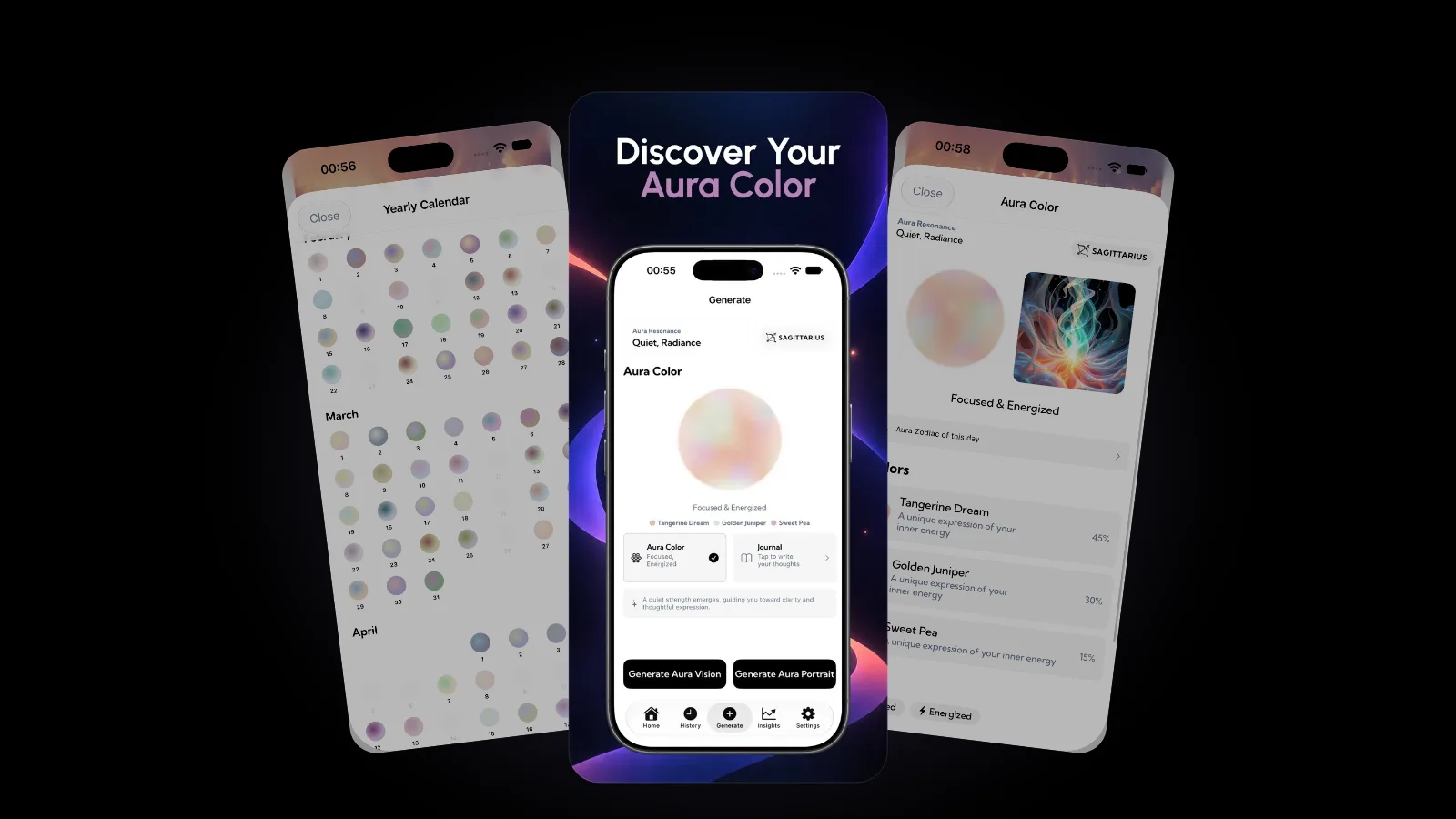
In Aura, you log your mood, choosing from 28 moods and up to three at once. Every day the app reads your mood, your zodiac sign and the sky above to reveal your aura color, which is part of Aura Pro. Each reading names its colors with poetic names and a percentage for each. Our guide to sun, moon and rising signs explains the zodiac side.
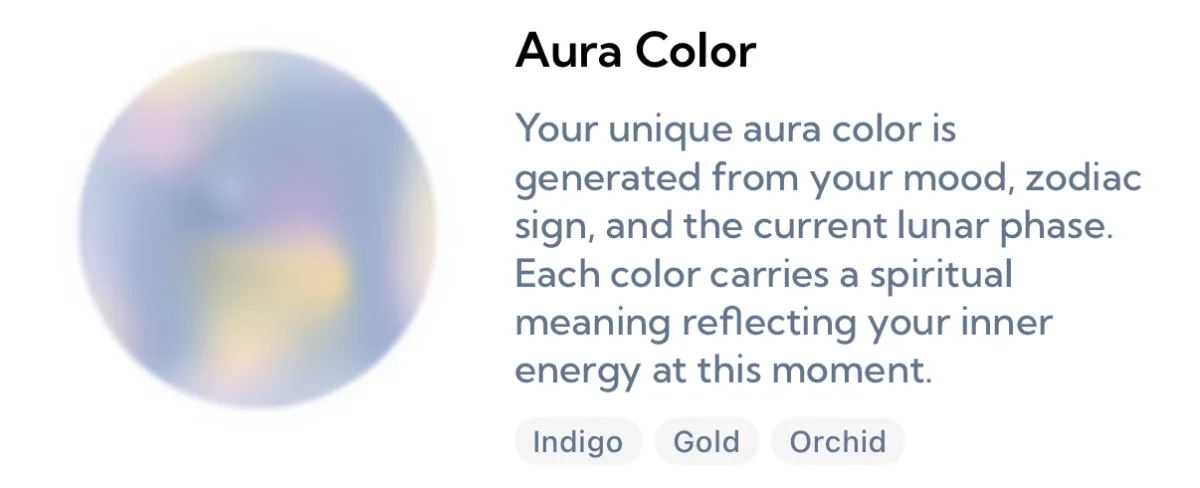
For example, a Focused and Energized reading named Tangerine Dream at 45%, Golden Juniper at 30% and Sweet Pea at 15%. The shown percentages don't always add up to 100, so read them as relative weights: which color leads, and by how much. In our reading, Tangerine Dream is orange, Golden Juniper a pale green, Sweet Pea a lilac pink and Orchid a pink-purple.
Your colors also fill a calendar of your emotional year. A month of readings shows which pairs keep returning and which moods come with them. Our guide to the year in pixels mood tracker shows how that kind of color calendar works. You can find more posts like this in the Aura category of our blog.
Aura colors are a prompt for reflection, not medical or psychological advice.
FAQ
What is the most common aura color combination?
Nobody knows. Auras can't be measured, so there is no data on which pairs appear most often, and any guide that names one is guessing. To find your own most common pair, track your colors for a few weeks and count.
Which color is my main aura color?
The strongest one. If your reading shows percentages, as Aura's do, the color with the highest number is your main color for that reading. Without numbers, go with the most vivid color or the one you noticed first.
Can aura colors clash?
Not in most traditions. Two colors that seem to pull apart, such as red's drive and blue's calm, are usually read as two needs sharing the day. That tension can be useful, because it often names exactly what you're balancing.
What does it mean if my aura has three colors?
It means your mood has a main theme, a supporting quality and a smaller accent. Read the top two as a pair, then ask what the third adds. It's a fuller picture of a mixed mood, nothing unusual.
Get started
If you want to see which colors you pair most often, Aura is free to download on the App Store for iPhone, with an optional Aura Pro subscription that includes your daily aura color. No account is needed, your mood history and journal are stored on your device, and your data is never sold.