SunDoseUV index9 min read
Best UV index for tanning: why no level is truly safe
There is no best UV index for tanning, because no level makes a tan safe. See how risk climbs with UV and by hour, the shadow rule, and how to cut it.
There is no best UV index for tanning. No UV level makes a tan safe: health bodies describe a tan as a sign of DNA damage, and the World Health Organization recommends sun protection from UV index 3. A lower index slows the damage down. It doesn't switch it off.
Search this question and you'll find "optimal tanning ranges" with nothing behind them. This guide sticks to what the WHO, the EPA, the NHS, Cancer Research UK and dermatologists actually say: how risk changes by UV level and by hour, how the shadow rule works and how to cut the risk if you'll be outside anyway. We make SunDose, a UV index and sun exposure app for iPhone. This is general information, not medical advice.
Is there a best UV index for tanning?
No. There is no UV index at which tanning is safe, because the tan itself is the damage. The Skin Cancer Foundation's guide to tanning says a tan "is evidence of DNA injury to your skin" and that "there is no such thing as a safe or healthy tan." Cancer Research UK's page on sun, UV and cancer is just as plain: "There is no such thing as safe UV tanning." The NHS sun safety advice says there's no safe or healthy way to get a tan, and that a tan does not protect your skin from the sun's harmful effects. On the scale itself, the WHO's UV index Q&A says that from an index of 3, "there is an increased risk of skin damage, and protective measures are recommended." So any chart that labels a band "best for tanning" has invented it. What the index can tell you is how fast damage builds and when in the day to take extra care.
In a 2026 statement on UV misinformation, the foundation adds that about 90 percent of nonmelanoma skin cancers and 86 percent of melanomas are associated with UV exposure. Want the color without the UV? Cancer Research UK says: "If you want a tan, use bottled fake tan or get a spray tan." It also notes that a fake or natural tan "does not protect your skin from UV radiation."
What happens to your skin at each UV index level?
The higher the index, the faster skin is damaged. Cancer Research UK's page on the UV index and sunburn risk says "the higher the UV index number, the less time it takes for your skin to become damaged by the sun." The US EPA's UV index scale uses three bands:
| UV index | EPA band | Official advice | If you want a tan |
|---|---|---|---|
| 1-2 | Low | EPA: no protection needed | Burning is slow, but UVA is still there and a tan still signals damage |
| 3-7 | Moderate to high | EPA: protection needed, shade from late morning through mid-afternoon. WHO: protect from 3 | Strong enough to damage some skin types. UV 6 sits here: no sweet spot |
| 8 and above | Very high to extreme | EPA: extra protection needed. WHO: avoid being outside during midday hours | Damage builds fastest |
So, is UV 6 good for tanning? No. It's in the band where the EPA says protection is needed. Can you tan at UV 3? Your skin can react, and that's the problem: Cancer Research UK says that at 3 and above, "the sun is strong enough to cause damage for some skin types."
Minutes to burn depend on your skin, so we cover them in how long it takes to get sunburned. For the five-band scale that weather apps use, see the UV index scale explained on the SunDose site.
What time of day is UV strongest?
Around solar noon. The WHO says the day's maximum UV "occurs during the four-hour period around solar noon," and that solar noon falls between noon and 2pm, depending on location and daylight saving time. Other health bodies give similar windows:
- CDC: its sun safety facts say "UV rays are strongest from 10 a.m. to 4 p.m. daylight saving time" in the continental US.
- American Academy of Dermatology: its prevention advice says "the sun's rays are strongest between 10 a.m. and 2 p.m."
- NHS: in the UK, stay in the shade between 11am and 3pm from March to October.
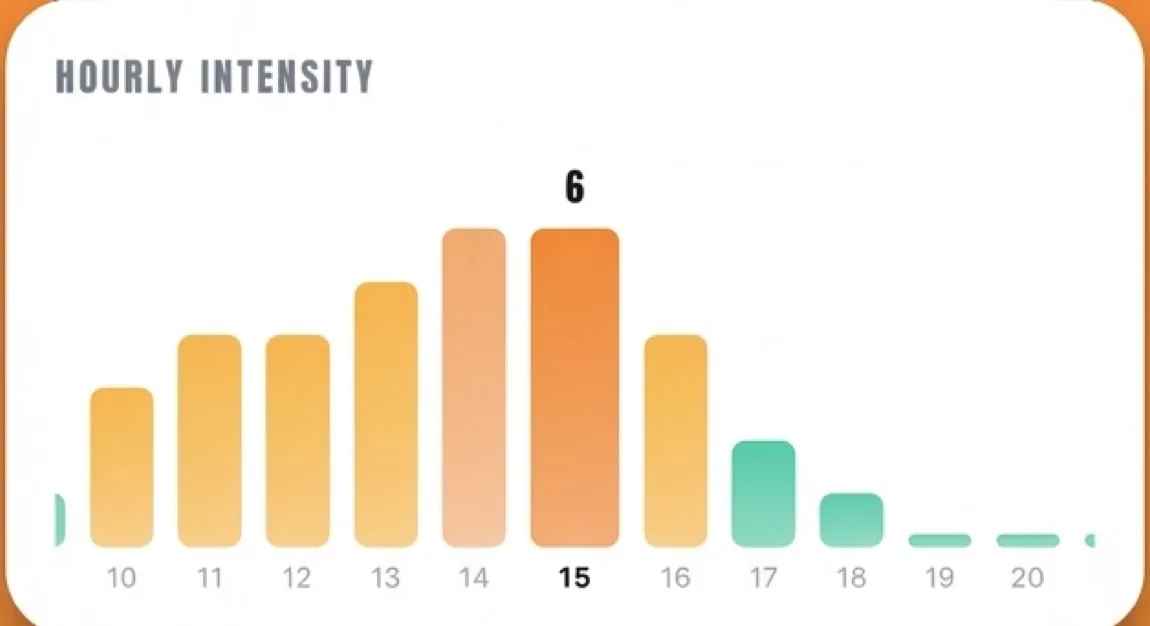
Two things follow from the WHO's wording. First, the UV index in a daily forecast is that midday maximum, so other hours sit at or below it. Second, because solar noon can fall as late as 2pm, mid-afternoon can sit closer to the peak than mid-morning. That's the honest answer to morning vs afternoon sun: neither is safe, and the clock tells you less than your distance from solar noon.
What is the shadow rule?
The EPA's no-gadget check:
- If your shadow is taller than you (early morning and late afternoon), your UV exposure is likely to be lower.
- If your shadow is shorter than you (around midday), you're exposed to higher levels of UV. Seek shade and protect your skin and eyes.
A long shadow means lower UV, not zero UV, so the protect-from-3 advice still applies.
Does a lower UV index mean safer tanning?
It means slower damage, not safe tanning. Below 3, burning takes longer, but UVA and UVB don't move together. The Skin Cancer Foundation's page on UV radiation says UVA rays "maintain the same level of strength during daylight hours throughout the year" and cause genetic damage to skin cells, while UVB fluctuates and peaks from late morning to mid-afternoon. Our guide to UVA vs UVB explains the difference.
What about building up slowly at low UV to "prepare" your skin? The NHS is clear that a tan does not protect you, which is why the base tan myth doesn't hold up. A grey sky isn't a pass either: the CDC says "the sun's UV rays can reach you on cloudy and cool days," as we explain in can you get sunburned on a cloudy day.
How do skin type and sunscreen change the picture?
Skin type changes how fast you burn, not whether a tan is damage. Cancer Research UK's advice at UV 3 and above is to think about protecting your skin, "especially if you burn easily." If you're unsure how easily you burn, our guide to Fitzpatrick skin types explains the scale.
Sunscreen is one layer of protection, not a reason to stay out longer. The guidance agrees:
- AAD: broad-spectrum, water-resistant SPF 30 or higher, reapplied every two hours and sooner after swimming or sweating.
- NHS: at least SPF 30 for UVB and at least 4-star UVA protection.
- EPA: at UV 3 to 7, sunscreen plus protective clothing, a wide-brimmed hat and sunglasses.
If you are in the sun anyway, how do you cut the risk?
If you'll be outside on a high UV day anyway, this checklist pulls the sourced advice into one place.
- Check the UV index, not the temperature. Protection starts at 3, on cool and cloudy days too.
- Find the peak. Check the hourly forecast and give the hours around solar noon to the shade.
- Use the shadow rule. Shorter than you means seek shade now.
- Cover up. Clothing, a wide-brimmed hat and sunglasses don't wear off.
- Apply SPF 30 or higher and reapply every two hours, sooner after swimming or sweating.
- Take extra care near water, snow and sand. The AAD says they reflect the sun's rays, "which can increase your chance of sunburn."
- Skip tanning beds. The AAD says their UV light "can cause skin cancer and premature skin aging."
- Keep time in direct sun short, and time it. An hour on a towel goes fast.
How does SunDose show UV hour by hour?
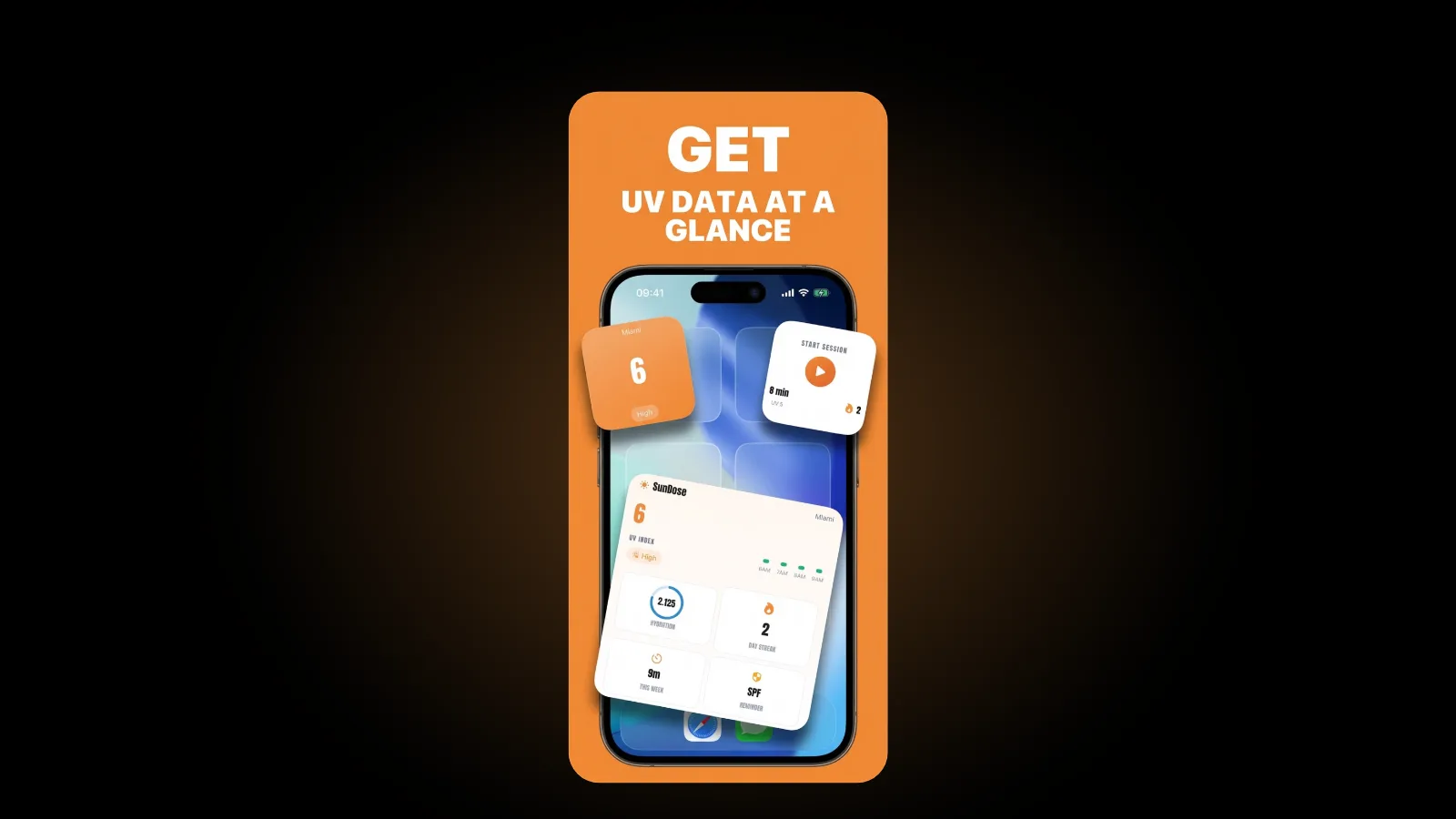
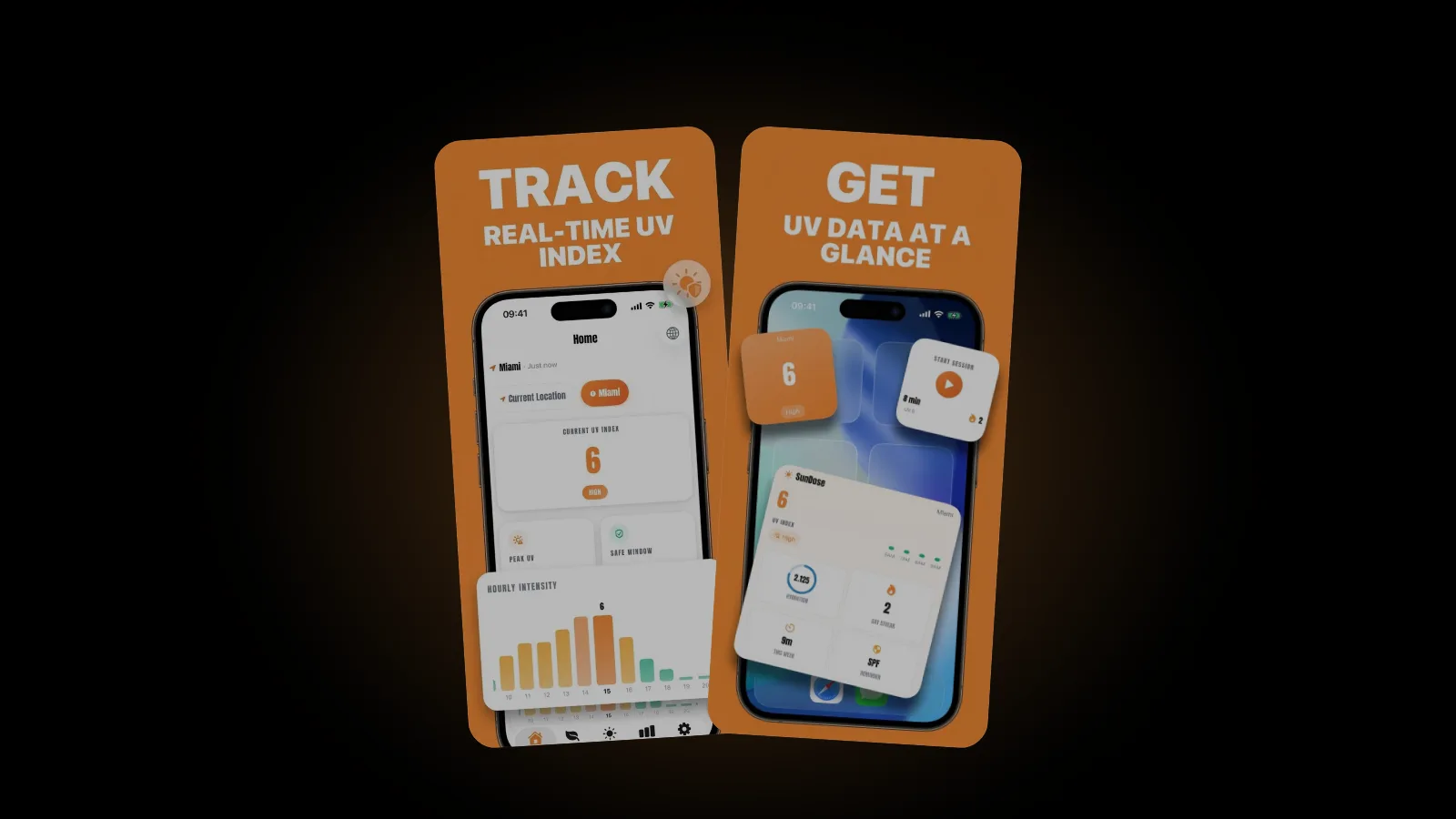
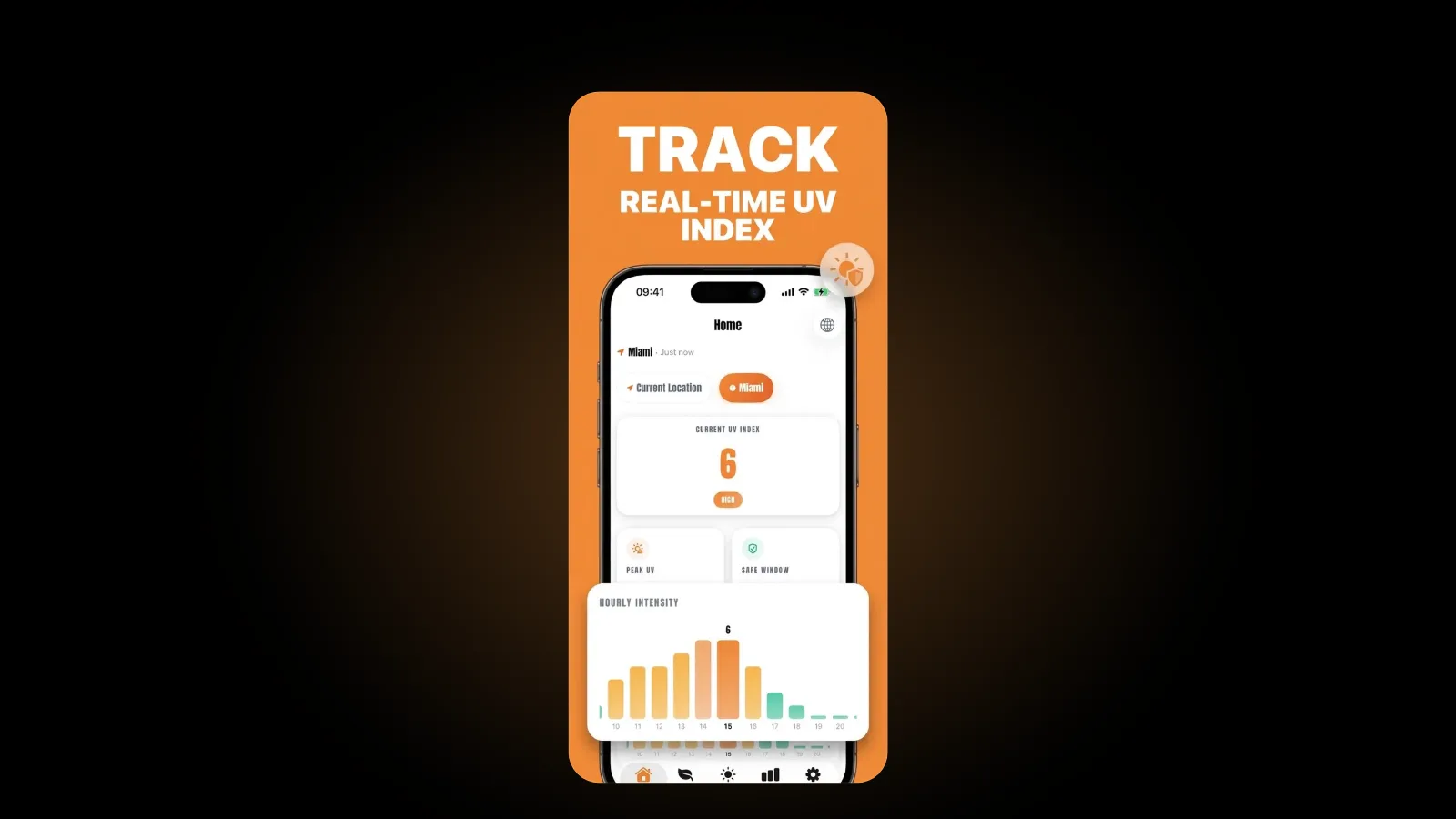
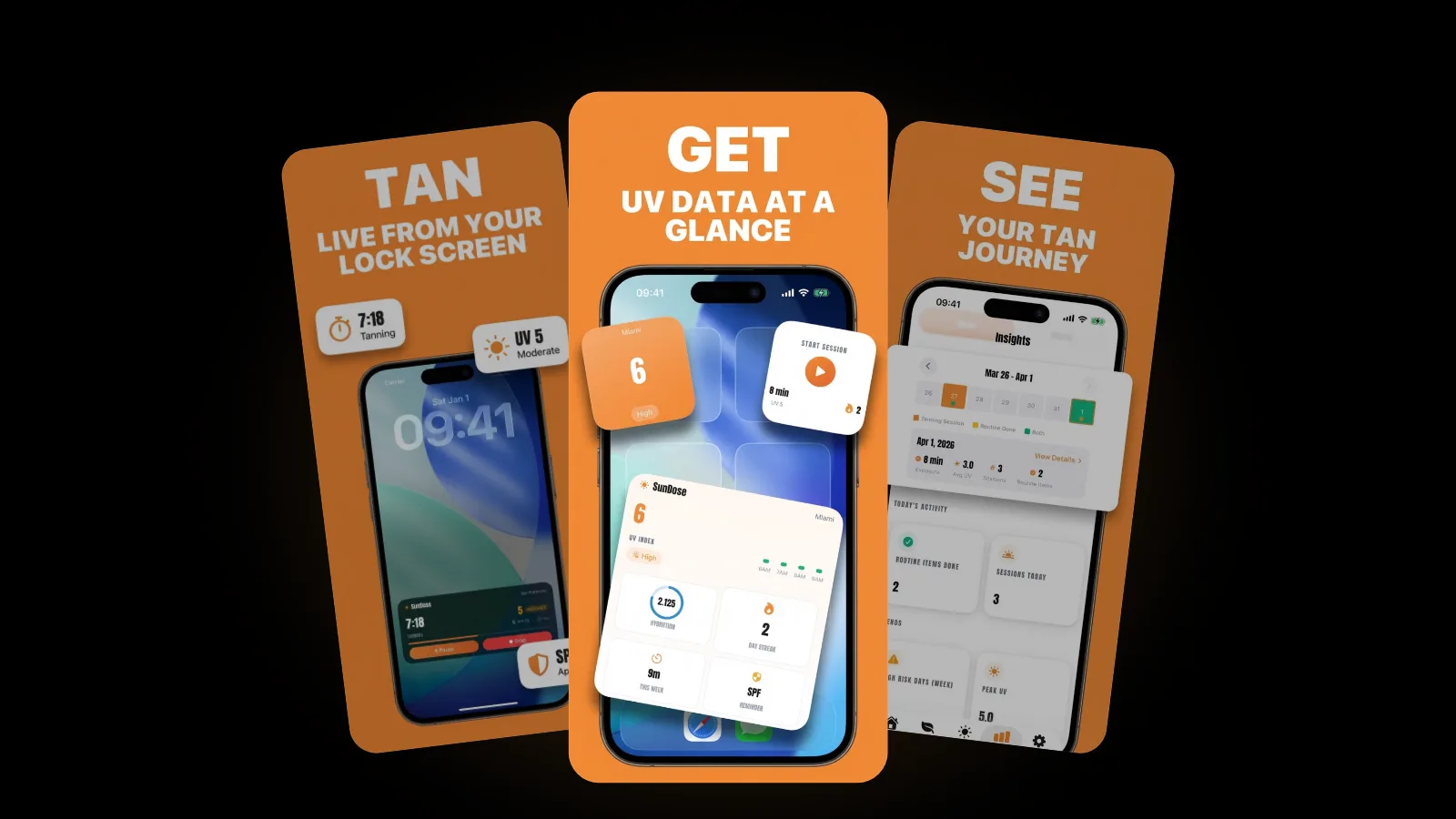
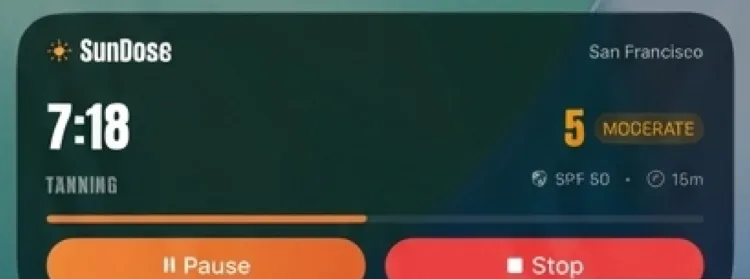
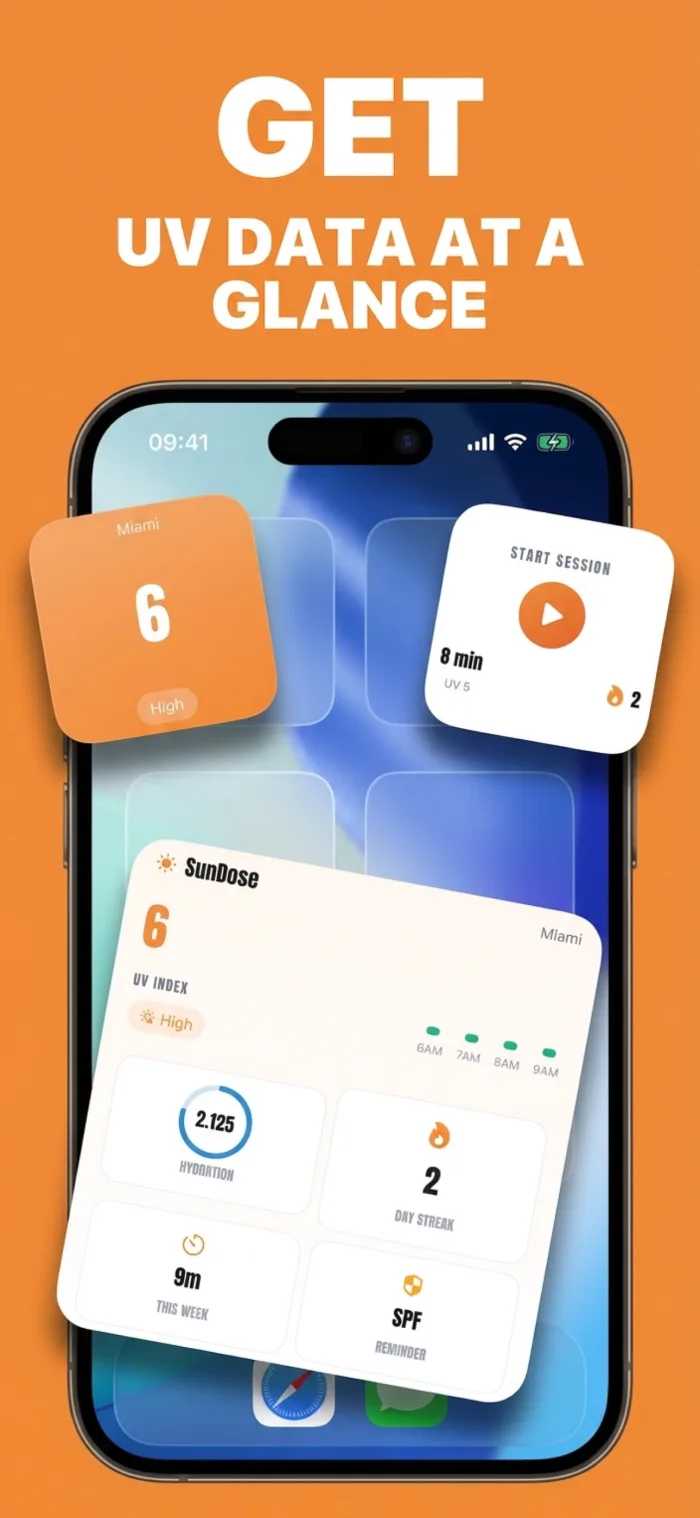
SunDose reads UV from Apple WeatherKit and shows the live UV index for your location with an hourly forecast, plus a weekly one. The hourly view shows when the peak actually falls. Home Screen widgets keep the UV number in sight before you head out.
If you start a session, SunDose suggests a length from 1 to 180 minutes, calculated from your skin type, the current UV and the SPF you say you applied. As UV rises, the suggestion gets shorter. Flag a sensitivity, such as retinoids, isotretinoin or doxycycline, and it shortens further. Reapply prompts run on the session clock, and a running session shows on the Lock Screen as a Live Activity.
SunDose records the reported UV and the time; it is not a dosimeter measuring your skin. A timer doesn't make a tan safe. It helps you see the peak, protect on schedule and stop sooner.
FAQ
What UV index do you tan at?
None that tans without harm: the Skin Cancer Foundation calls a tan evidence of DNA injury to your skin. From UV index 3, the WHO says there is an increased risk of skin damage and recommends protection. At 1 and 2, burning is slow, but UVA is still present through daylight hours.
Is UV 6 good for tanning?
No. UV 6 falls in the EPA's 3 to 7 band, where protection is needed and shade is advised from late morning through mid-afternoon. Cancer Research UK notes that the higher the index, the less time it takes for skin to become damaged, so there is no tanning sweet spot.
What is the best time of day to tan?
There is no safe time to tan. UV peaks in the four hours around solar noon, which falls between noon and 2pm depending on location and daylight saving time, according to the WHO. If your shadow is taller than you, exposure is likely lower, but the advice to protect from UV 3 still applies.
Can you tan at UV 3?
Yes, and that's the concern. Cancer Research UK says that at UV 3 and above, the sun is strong enough to cause damage for some skin types, and the WHO recommends protection from 3. A tan that develops is evidence of DNA injury, not a healthy glow, according to the Skin Cancer Foundation.
Get started
SunDose is free to download on the App Store for iPhone with iOS 26 or later, with optional premium tiers. The live UV index, hourly forecast and session timer work without a subscription, and your profile and sessions stay on your device. SunDose is a wellness app, not a medical device, and the protecting is still up to you. Read more SunDose articles.