SunDoseUV index9 min read
Can you get sunburned on a cloudy day? Clouds, snow, water
Yes. Up to 80% of UV can pass through light cloud, and snow can nearly double it. See what clouds, snow, water, sand, altitude and shade do to UV.
Yes. Clouds block less UV than they seem to: the EPA says up to 80% of solar UV can get through light cloud cover, and the WHO says UV can be high even under cloud. Snow, water and sand add reflected UV, and altitude raises it further. Neither the sky nor the thermometer shows how strong UV is.
This guide covers every "the sky looks safe" situation: cloud types, snow, water, sand, altitude and shade, with figures from the WHO, EPA, CDC, American Academy of Dermatology and Cancer Research UK. We make SunDose, a UV index and sun exposure app for iPhone. This is general information, not medical advice.
Can you get sunburned on a cloudy day?
Yes, you can get sunburned on a cloudy day. The World Health Organization's fact sheet on ultraviolet radiation says UV levels "are highest under cloudless skies but can be high even with cloud cover." The CDC's sun safety page says the sun's UV rays "can reach you on cloudy and cool days, and they reflect off of surfaces like water, cement, sand, and snow." How much gets through depends on the cloud. The EPA estimates that broken cloud still lets through 73% of UV, and even a fully overcast sky lets through about 31%. Cool air doesn't help either: Cancer Research UK explains that UV rays aren't hot and you can't feel them, because the sun's heat comes from infrared. A grey, chilly day can still carry enough UV to burn, and the WHO's advice to protect your skin from a UV index of 3 applies whatever the weather looks like.
What each "looks safe" condition does to UV, per the primary sources:
| Condition | What it does to UV | Source |
|---|---|---|
| Clear sky | Virtually 100% gets through | EPA |
| Scattered cloud | About 89% gets through | EPA |
| Broken cloud | About 73% gets through | EPA |
| Light cloud | Up to 80% gets through | WHO, EPA |
| Overcast | About 31% gets through | EPA |
| Puffy clouds near the sun | Can briefly raise UV | EPA, 2012 study |
| Fresh snow | Reflects up to 80%. In winter, can nearly double UV | WHO, EPA |
| Dry beach sand | Reflects about 15% | WHO, EPA |
| Water | Reflects about 10%. Half a metre down, UV is still 40% as intense | EPA, WHO |
| Altitude | 10% to 12% more per 1,000 metres (WHO), about 6% per kilometre (EPA) | WHO, EPA |
| Shade | Can cut UV by 50% or more, but reflected UV still reaches you | WHO, EPA |
How much UV gets through clouds?
Most of it, unless the sky is fully overcast. The EPA's page Learn About the UV Index, updated in January 2026, says clear skies let through virtually 100% of UV, scattered clouds 89%, broken clouds 73% and overcast skies 31%. Of those four, only overcast cuts UV by more than half.
Other sources put thin cloud higher still. The EPA's UV Index poster and the WHO's Global Solar UV Index: A Practical Guide both say up to 80% of solar UV can penetrate light cloud cover. Cancer Research UK's page on the UV index and sunburn risk says "over 90% of UV rays can still pass through cloud and cause sunburn." The word "cloud" covers everything from a thin veil to a thick grey sheet, but none of these sources treats it as a shield.
Can clouds make UV stronger?
Sometimes, briefly. The EPA's 2004 guide to the UV Index says puffy, fair-weather clouds deflect rays "and can increase UV radiation reaching the surface." A 2012 study in Atmospheric Research recorded one such event: under broken cloud with cumulus around the sun, the UV index climbed from 2.6 to 10.4 in about 30 minutes around midday, above the clear-sky value. The WHO guide adds that haze "can even increase UV radiation exposure." Spikes like these are hard to predict.
Why can snow, water and sand burn you faster?
Because they bounce UV back at you, so you're exposed from above and below. The WHO fact sheet says reflective surfaces "such as water, sand and fresh snow, increase the UVR level." The American Academy of Dermatology (AAD) says in its prevention advice to "use extra caution near water, snow, and sand, as they reflect the damaging rays of the sun."
How much each surface sends back:
- Fresh snow: up to 80% of UV, per both the WHO and EPA guides. The EPA's UV index descriptions add that in winter, reflection off snow "can nearly double UV strength."
- Sand: dry beach sand reflects about 15%, says the WHO guide. The EPA descriptions warn that white sand and other bright surfaces "reflect UV and can double UV exposure."
- Water: about 10%, per the EPA guide. The WHO guide gives sea foam about 25%.
Can you get sunburned in the water?
Yes. The WHO guide says water "offers only minimal protection from UV radiation," and that half a metre below the surface, UV is still 40% as intense. In a July 2026 article on sun safety myths, Cancer Research UK says "it's possible to get sun damage while swimming in a pool or the sea," and that water reflects some UV as well. If you've already burned, see how to treat sunburn.
Does altitude raise the UV index?
Yes. The air is thinner higher up, so less UV is absorbed on the way down, the WHO fact sheet explains. The sources differ on how much. The WHO guide says UV rises by 10% to 12% for every 1,000 metres. The EPA's UV index page uses about 6% per kilometre, the figure its own UV index calculation applies.
At 2,000 metres, that's roughly 12% more UV than at sea level by the EPA's figure, or 20% to 24% by the WHO's. That's our arithmetic, before any snow is counted.
Then add the snow. The WHO guide says snow reflection can double your overall exposure, "especially at high altitude." The EPA poster warns that even when the index is low, snow on a sunny day "reflects enough UV radiation to damage eyes and skin." A freezing ski day is no protection.
Can you get sunburned in winter or in the shade?
Yes to both. The WHO guide says UV is generally lower in winter, but it asks for particular attention in early spring, "when temperatures are low but the sun's rays are unexpectedly strong."
Temperature is the trap. Cancer Research UK's myths article says the warmth you feel comes from infrared, not UV, so "we can't tell how strong the sun's rays are from how warm it is outside."
Shade helps, but it isn't a full stop. The WHO guide says shade can reduce UV by 50% or more. The EPA's UV radiation fact sheet adds that snow, sand, pavement and water reflect much of the UV that reaches them, so UV "can be deceptively high even in shaded areas." That's why the CDC advises sunscreen and protective clothing even in the shade. A beach umbrella blocks the sun overhead, not the UV reflected off the sand around it.
What about UV through a car or office window? That's mostly a UVA question, covered in our guide to UVA vs UVB.
How do you check UV when the sky looks safe?
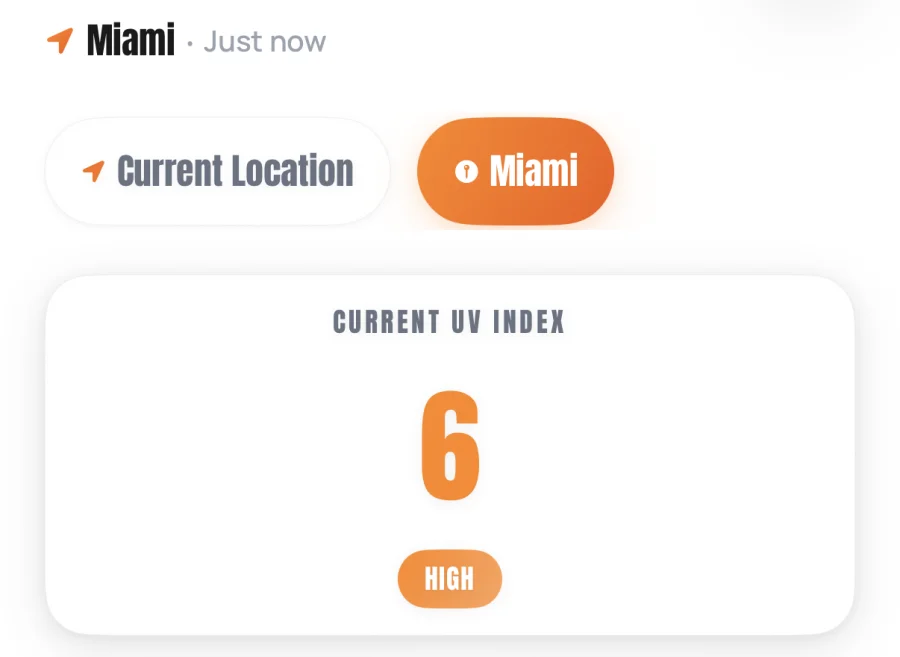
Check the UV index, not the sky or the thermometer. Official forecasts already account for cloud: the EPA's UV Index overview says its forecast "takes into account clouds and other local conditions." As Cancer Research UK puts it, to understand how strong the sun's rays are, "we need to check the UV index."
One habit covers every situation in this guide:
- Look up the number before you go out, on grey, cold and bright days alike.
- Act at 3 or above. The WHO recommends sun protection from a UV index of 3, and the AAD says to use sunscreen outside "even on cloudy days."
- Check the hourly forecast. Our guide to the best UV index for tanning explains when UV peaks, and why no level makes a tan safe.
- Protect more near snow, water, sand and at altitude. The EPA warns that reflection off snow or bright sand can roughly double UV.
- Layer your protection. For UV 3 to 7, the EPA's UV index scale advises shade from late morning through mid-afternoon, protective clothing, a wide-brimmed hat, sunglasses and broad-spectrum sunscreen.
Skin type sets how fast you burn at a given index: see how long it takes to get sunburned.
Where SunDose fits
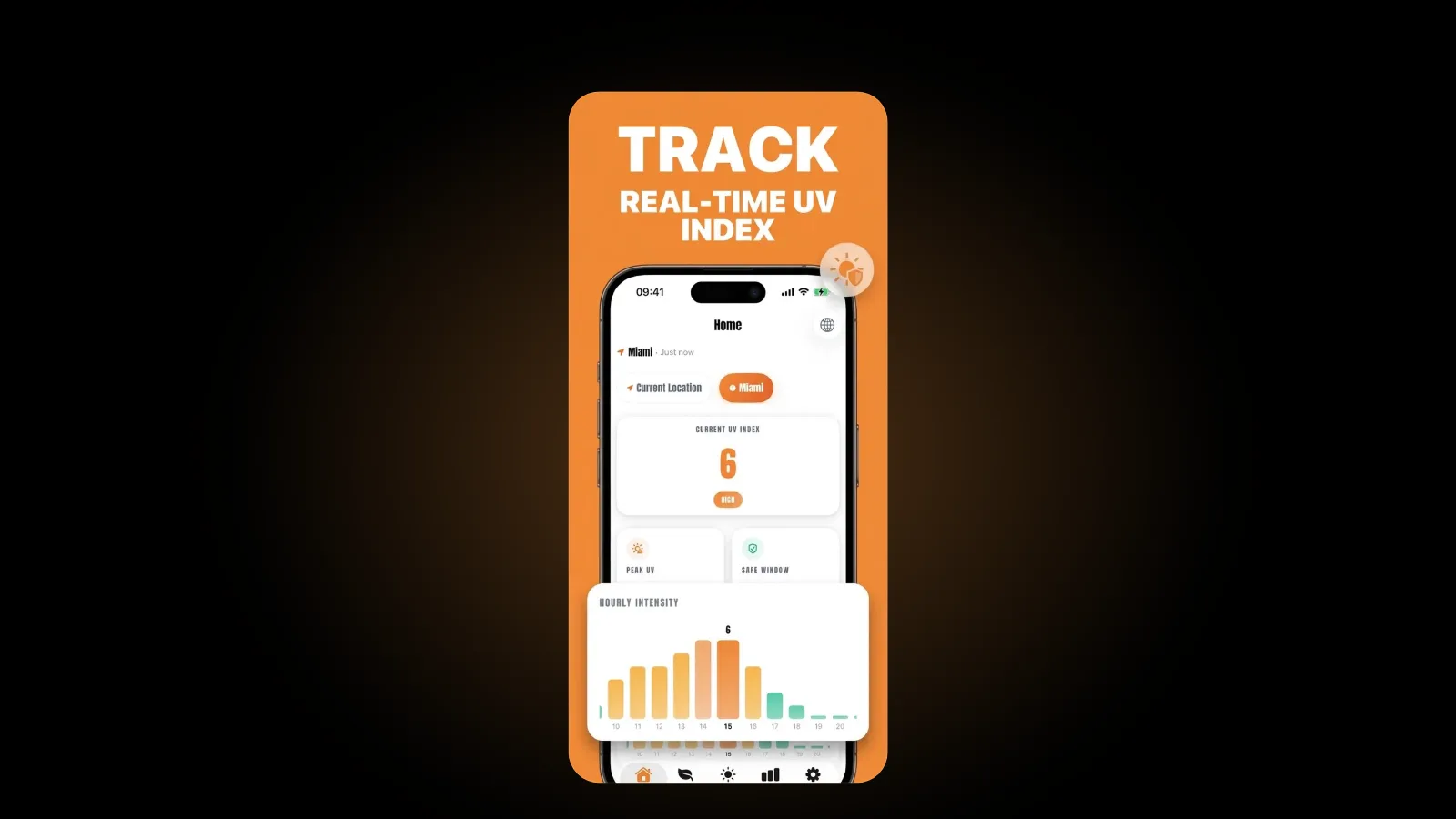
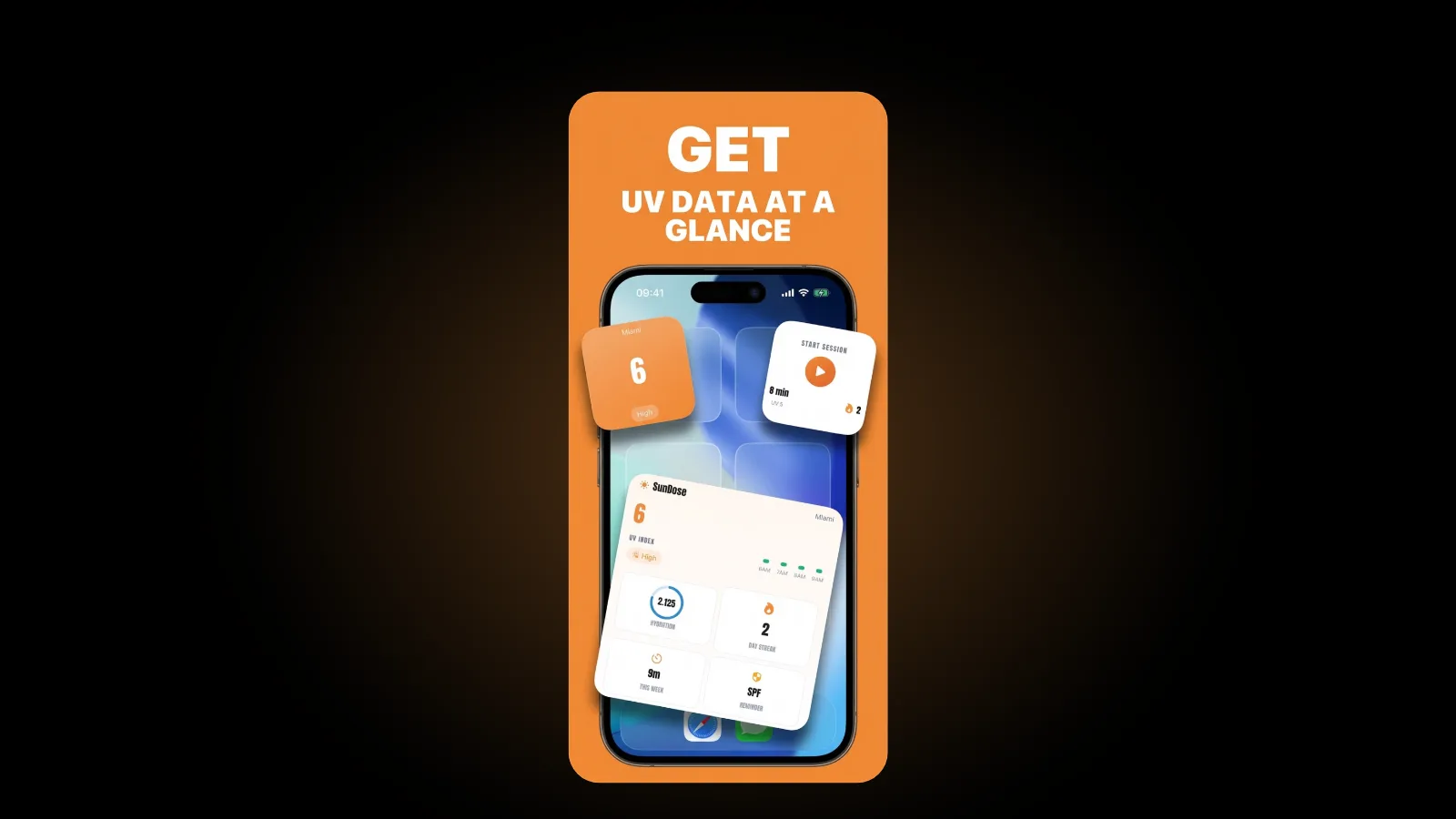
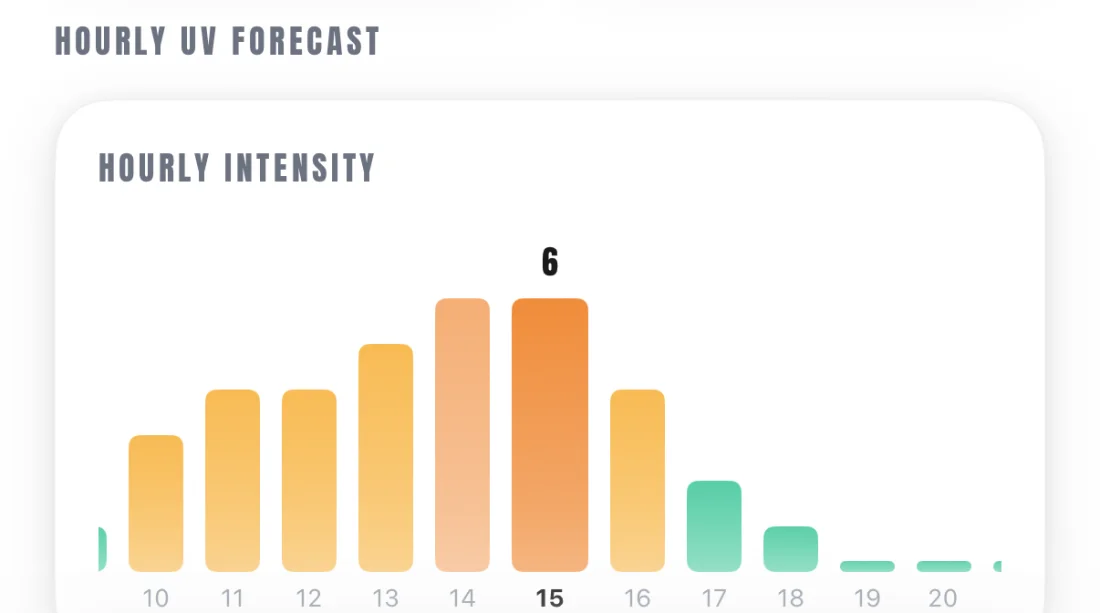
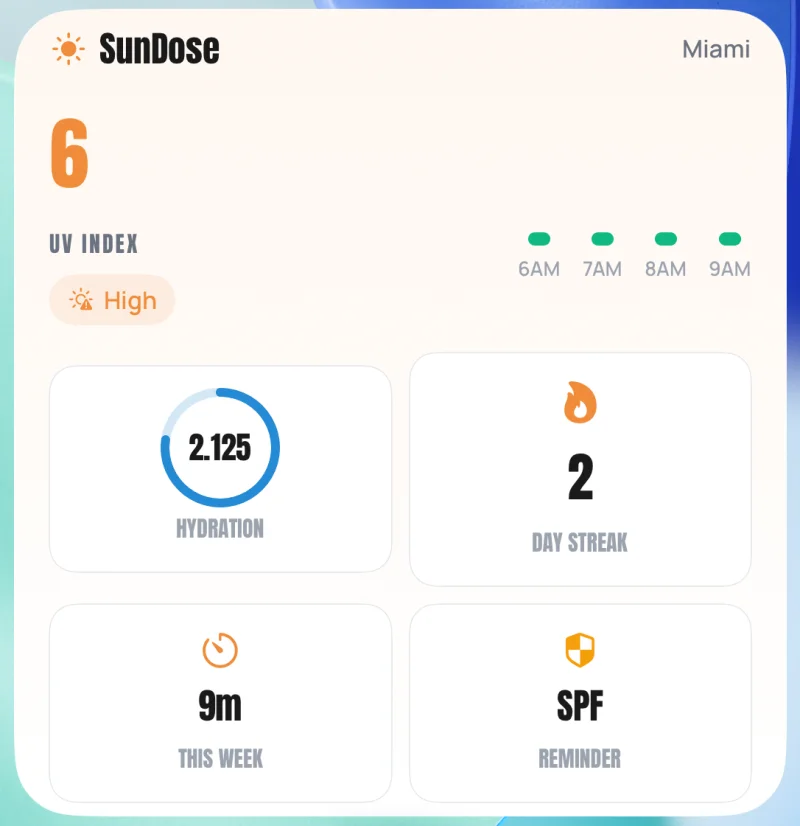
SunDose reads UV from Apple WeatherKit and shows the live UV index for your location, with hourly and weekly forecasts. On an overcast morning, you get a number instead of a guess, and Home Screen widgets keep it in view. Start a session and it suggests a length from 1 to 180 minutes, calculated from your skin type, the current UV and the SPF you say you applied, with reapply prompts on the session clock.
Two limits matter. SunDose doesn't add reflection from snow, water or sand to the reading, so near those surfaces your exposure can run higher than the number. And it records reported UV and time; it is not a dosimeter. Checking the number doesn't make sun exposure safe. It tells you when protection is needed.
FAQ
Does UV go through clouds?
Yes. The EPA estimates that scattered clouds let through 89% of UV, broken clouds 73% and a fully overcast sky about 31%. The WHO and the EPA both say up to 80% of solar UV can penetrate light cloud cover, so a grey sky is not protection.
Can you get sunburned in the water?
Yes. The WHO's practical guide says water offers only minimal protection from UV, and that half a metre below the surface, UV is still 40% as intense. Cancer Research UK says sun damage is possible while swimming in a pool or the sea.
Why is skiing sunburn so common?
Skiing stacks two boosts. The WHO guide says UV rises by 10% to 12% for every 1,000 metres of altitude, and fresh snow can reflect as much as 80% of UV. It adds that snow reflection can double your overall exposure, especially at high altitude.
Does sand reflect UV?
Yes, though less than snow. The WHO guide puts dry beach sand at about 15% reflection. The EPA warns that white sand and other bright surfaces can double UV exposure, and that reflection can keep UV deceptively high even in shade.
Get started
SunDose is free to download on the App Store for iPhone with iOS 26 or later, with optional premium tiers. The live UV index, hourly forecast and session timer work without a subscription, and your profile and sessions stay on your device. SunDose is a wellness app, not a medical device. Read more SunDose articles.