PosturaBack pain9 min read
Lower back pain from sitting: what helps at your desk
Why your lower back aches after hours at a desk, what research says about sitting, the moves and breaks NHS physios suggest, and when to see a GP.
Lower back pain from sitting usually has less to do with sitting itself than with staying still for hours. The NHS says back pain usually improves within a few weeks and only very rarely signals something serious. What helps at a desk is simple: change position often, stand up and walk regularly, keep active and add a few gentle moves.
Below: what the research says, how to sit and move at work, standing desks, when to see a doctor and how Postura can remind you to get up. This is general information, not medical advice. If your pain is severe, getting worse or comes with numbness or weakness, see a doctor.
Why does your lower back hurt when you sit?
A lower back that aches after a long day at a desk is usually a sign that you have stayed still too long, not a sign of damage. Dynamic Health, an NHS physiotherapy service in the East of England, says on its lower back pain page to keep active and not stay in the same position for long periods, whether that is sitting, lying or standing. The NHS page on back pain does not list sitting or posture among the causes at all. It says back pain can have many causes, that a pulled muscle is a common one and that the cause is not always clear. It adds that back pain usually improves within a few weeks, and that only very rarely is it a sign of a serious problem such as a broken bone, cancer or an infection. So if your back stiffens after hours in one chair, the likely fix is more movement through the day, not a perfect position.
Does sitting cause lower back pain?
Probably not on its own. In 2010, a systematic review in The Spine Journal, Causal assessment of occupational sitting and low back pain, found 24 studies that met its criteria, five of them high quality. The researchers checked them against the Bradford-Hill criteria, a standard set of tests for cause and effect, and found no high-quality studies supporting any of them. Their conclusion: it is unlikely that occupational sitting is independently causative of low back pain in the workers studied.
That does not mean a long day in a chair can never leave you sore, only that sitting has not been shown to cause back pain by itself. Plenty of pages quote dramatic figures about spinal pressure when you sit, but the research on whether sitting causes pain is calmer.
What is the best way to sit with lower back pain?
There is no single best sitting position for lower back pain, and the guidance does not name one. It agrees on support and variety instead.
South Tees Hospitals NHS Foundation Trust's posture advice says: "Sit with your bottom at the back of your seat ensuring that your lower back has support." It also suggests feet flat on the floor, knees level with your hips, and regular breaks with varied tasks. The Health and Safety Executive (HSE) workstation checklist adds that the seat back should give good lower back support, or you can use a cushion for extra support.
For a full chair, desk and screen setup, see how to sit at a desk properly. Even then, the best position is your next one.
How do you relieve lower back pain from sitting at work?
Get up and move, often. HSE guidance on work routine and breaks says short, frequent breaks beat longer, rarer ones: 5 to 10 minutes every hour is better than 20 minutes every 2 hours. Breaks should let you get up and move around, or at least stretch and change posture.
- Stand up regularly. Break up long stretches of sitting, even briefly.
- Take short walks. The NHS says walking may help with back pain.
- Use heat for stiffness. The NHS suggests a heat pack wrapped in a tea towel for stiffness or muscle spasms, and an ice pack wrapped the same way for pain and swelling.
- Stay active outside work. Swimming, yoga and pilates may also help, according to the NHS.
- Ask before taking painkillers. The NHS says ibuprofen may help but may not suit everyone, and paracetamol alone is not recommended for back pain. Check with a pharmacist if unsure.
For more ideas, see our guide to micro-breaks at work.
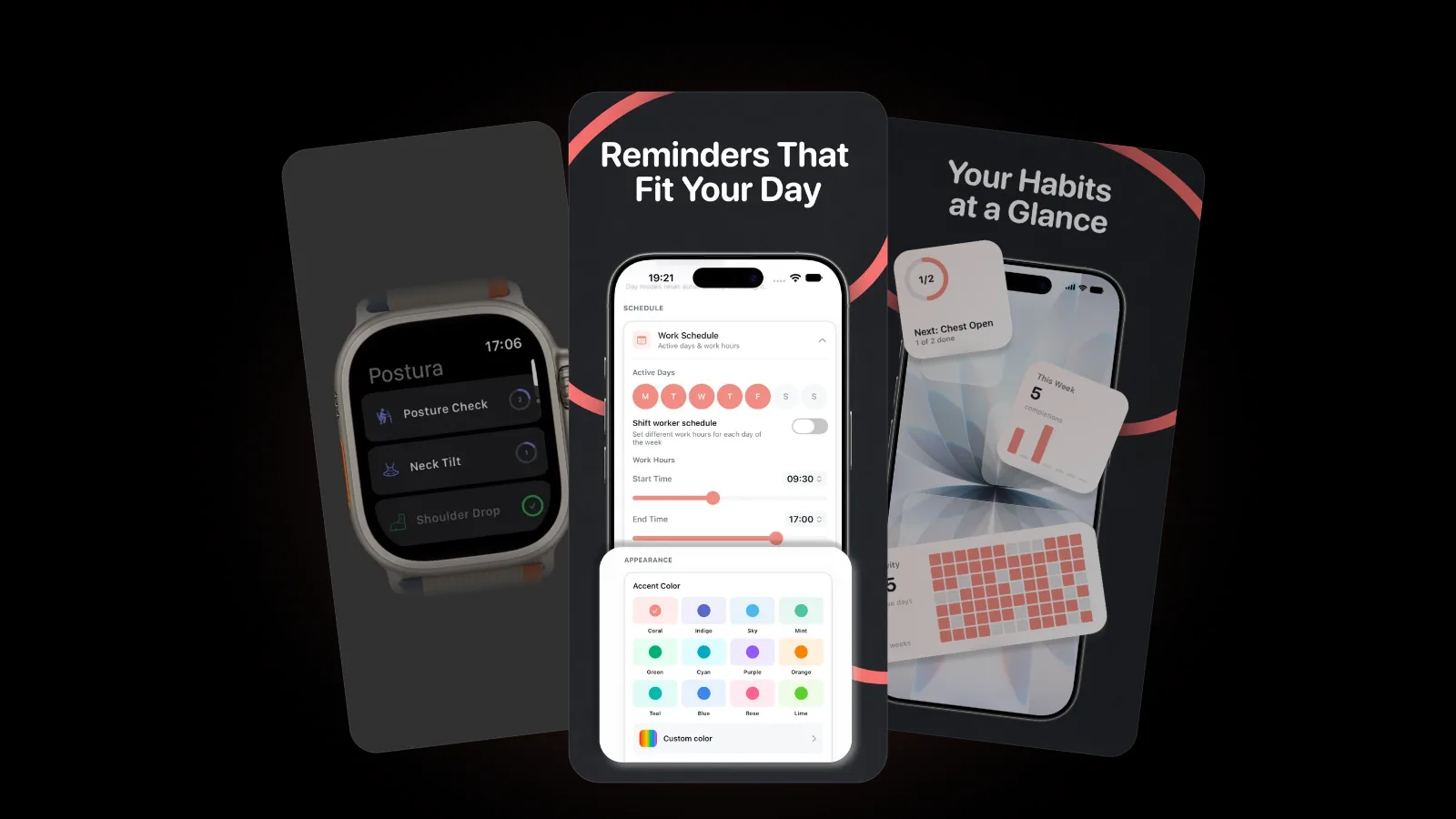
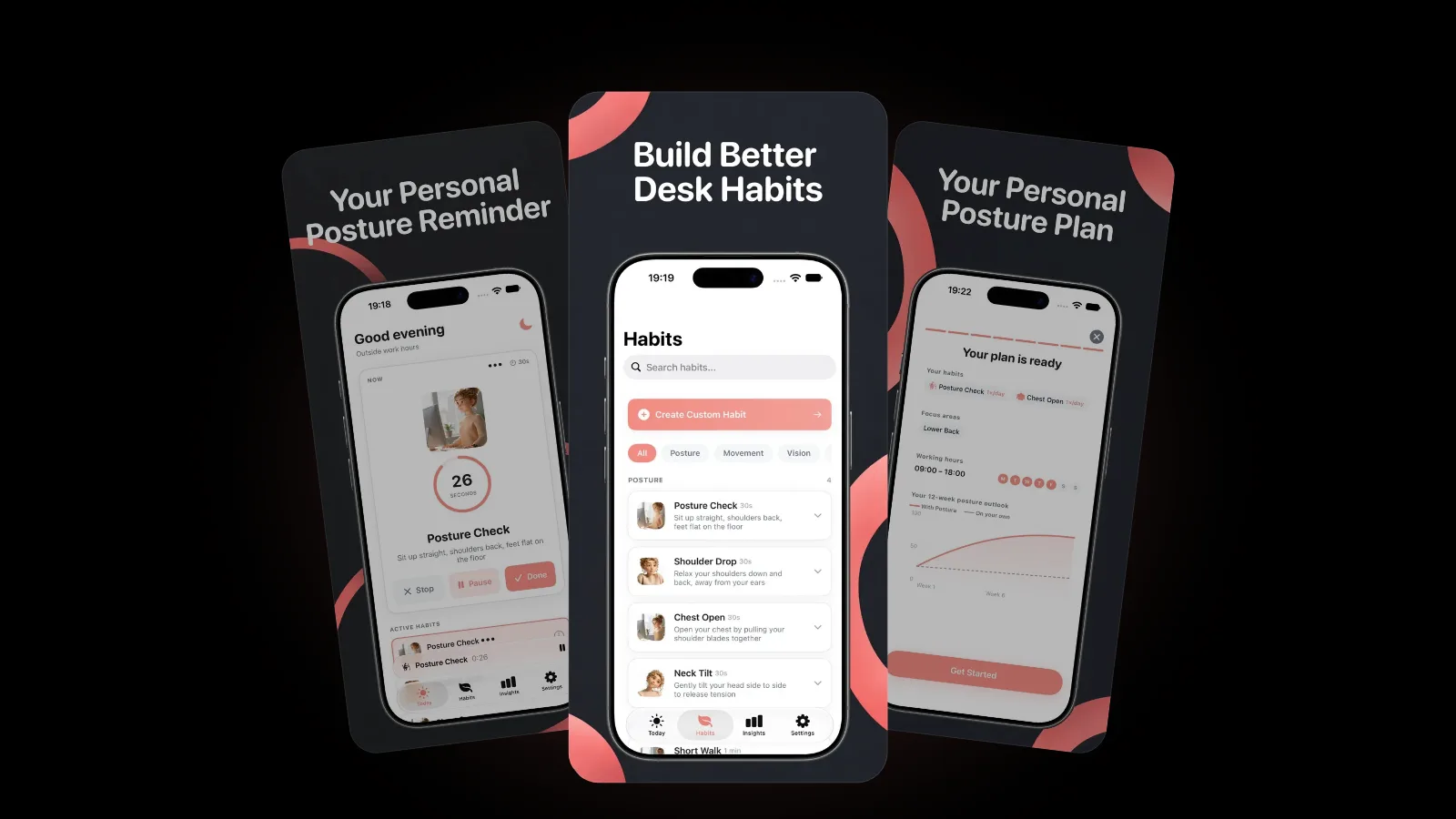
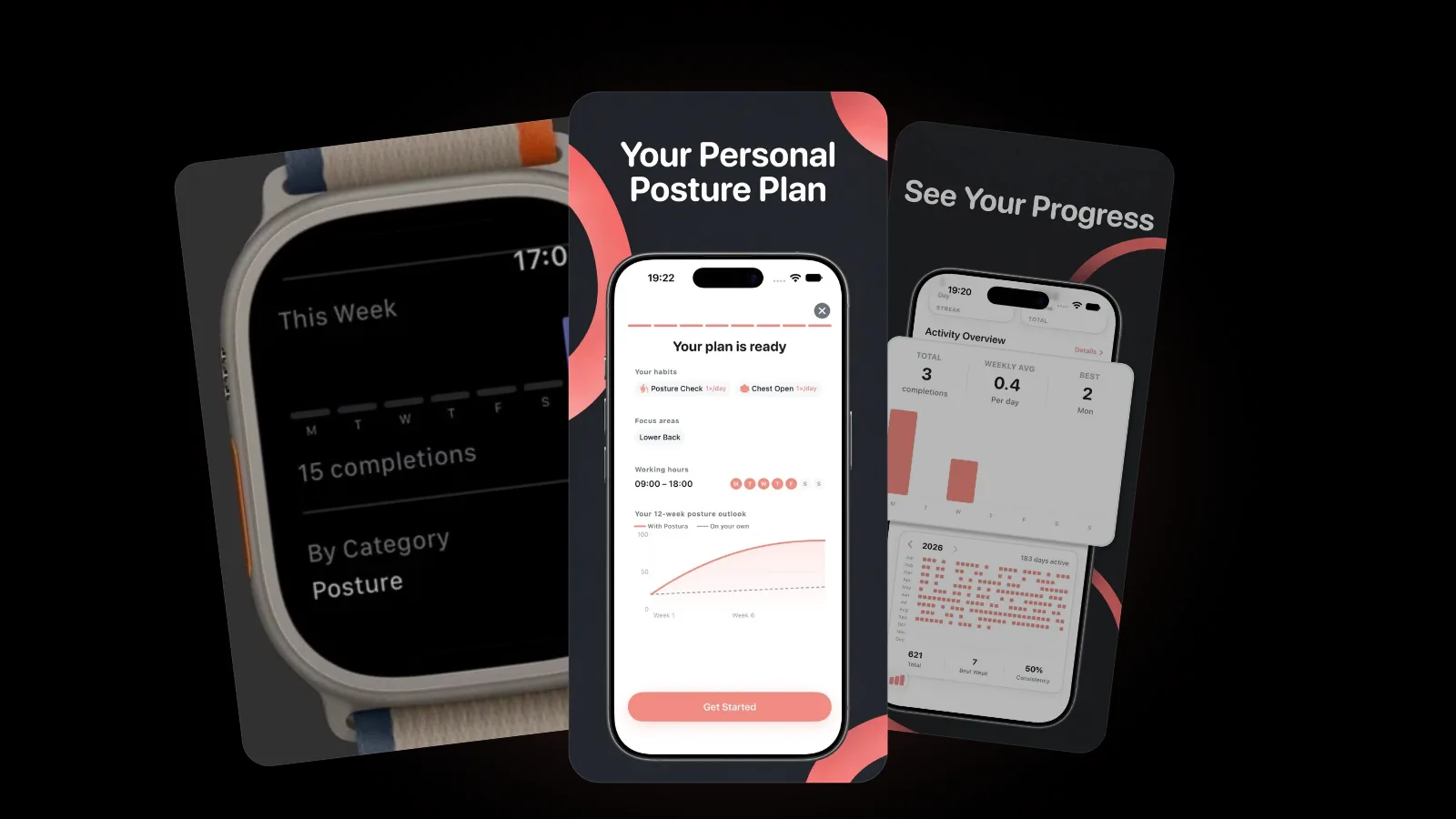
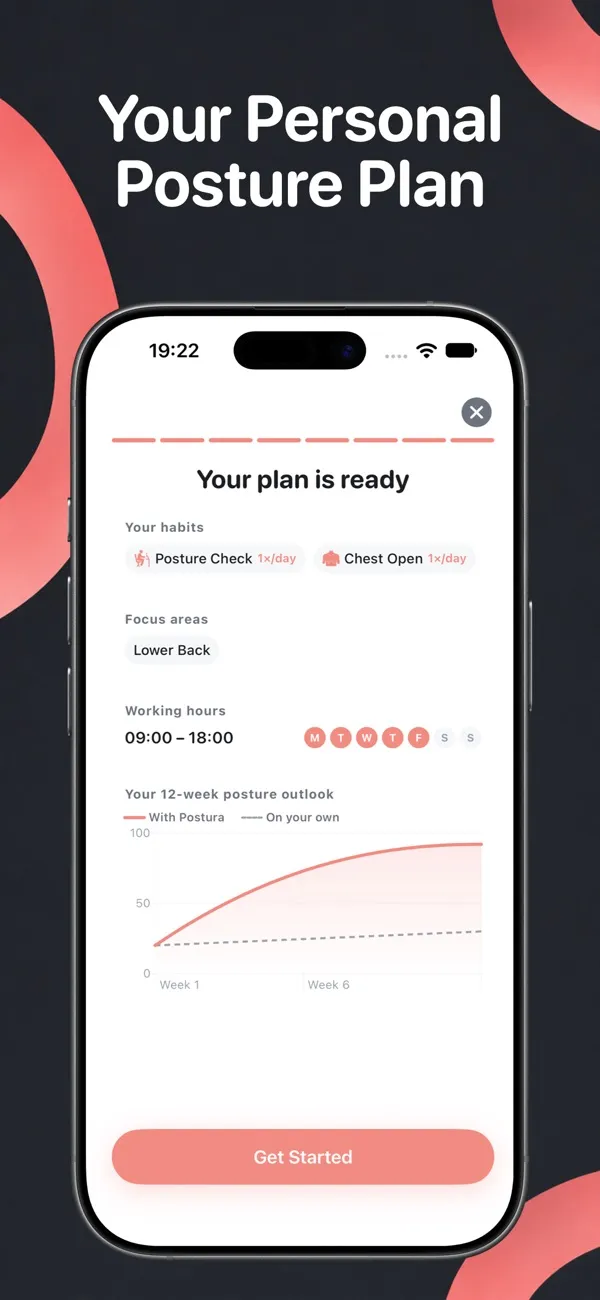
Remembering to stand up is the hard part, and Postura is built for it. On iPhone, setup asks where you feel tension. Choose Lower Back, described in the app as "Discomfort when sitting", and Postura suggests its Stand Up habit: "Stand up and stretch your legs for 30 seconds." Posture Check is always suggested too, and you can add Short Walk, a 60-second habit: "Take a quick walk around your space."
Reminders follow your working hours and active days. Each notification offers "Mark as done" and "Remind me in 15 min", so a call does not cost you the break. On a packed day, Busy Day, Meeting-Heavy or Silent Day mode cuts reminders back or switches them off, then resets at midnight.
Which gentle moves help a stiff lower back at work?
Two of Dynamic Health's lower back exercises suit an office, because neither needs more than a steady chair: the standing posterior pelvic tilt and sit to stand. Its advice is to aim for 7 to 10 repetitions of each exercise at first, and to repeat them 2 to 3 times a day if possible.
| Move | How to do it | Starting dose |
|---|---|---|
| Standing posterior pelvic tilt | Stand tall, feet hip-width apart, hands on your hips. Suck in your belly button and clench your buttocks, as if tucking a tail between your legs | 7 to 10 repetitions, 2 to 3 times a day |
| Sit to stand | Sit on a steady chair, feet flat and hip-width apart. Push through your heels to stand up tall, then sit back down slowly, leading with your hips | 7 to 10 repetitions, 2 to 3 times a day |
How much discomfort is fine? Dynamic Health says pain up to 4 out of 10 while exercising is fine, as long as it eases within 45 minutes. If it goes beyond that, reduce the range of movement or the number of repetitions. The NHS rule is simpler: stop if your pain gets worse and see a GP. Be patient, too: Dynamic Health says 6 to 12 weeks for a good improvement is normal.
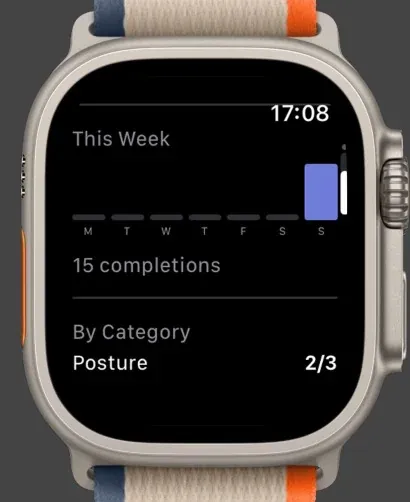
Postura has no lower back exercise of its own, but its Stand Up reminder is a natural moment for a few sit to stands. For the upper body, try our desk stretches for neck and shoulders or read about tech neck. Postura also runs on Apple Watch: see how to set up a posture reminder on Apple Watch.
Do standing desks help lower back pain?
A little, for some people, mostly when you switch between sitting and standing. In 2018, a meta-analysis in Ergonomics, Sit-stand workstations and impact on low back discomfort, pooled 8 studies. Among pain-free workers, sit-stand workstations brought a small reduction in low back discomfort (a standardised mean difference of -0.230). The authors concluded they may reduce low back pain, but found few studies in people who already have it.
Standing all day is no fix either. In 2020, a meta-analysis of three studies in the journal Work, Does objectively measured prolonged standing for desk work result in lower ratings of perceived low back pain than sitting?, found prolonged standing gave no significant reduction in low back pain compared with sitting. The authors did not recommend replacing seated desk work with prolonged standing.
| Option | What the evidence says | In practice |
|---|---|---|
| Sitting most of the day | Unlikely to cause back pain on its own (2010 review) | Fine, if you break it up |
| Standing most of the day | Not significantly less back pain than sitting (2020 meta-analysis) | Not a good swap |
| Alternating at a sit-stand desk | Small drop in discomfort in pain-free workers (2018 meta-analysis) | Worth using if you have one |
| Short, frequent breaks to move | Recommended by HSE over longer, rarer breaks | The easiest change today |
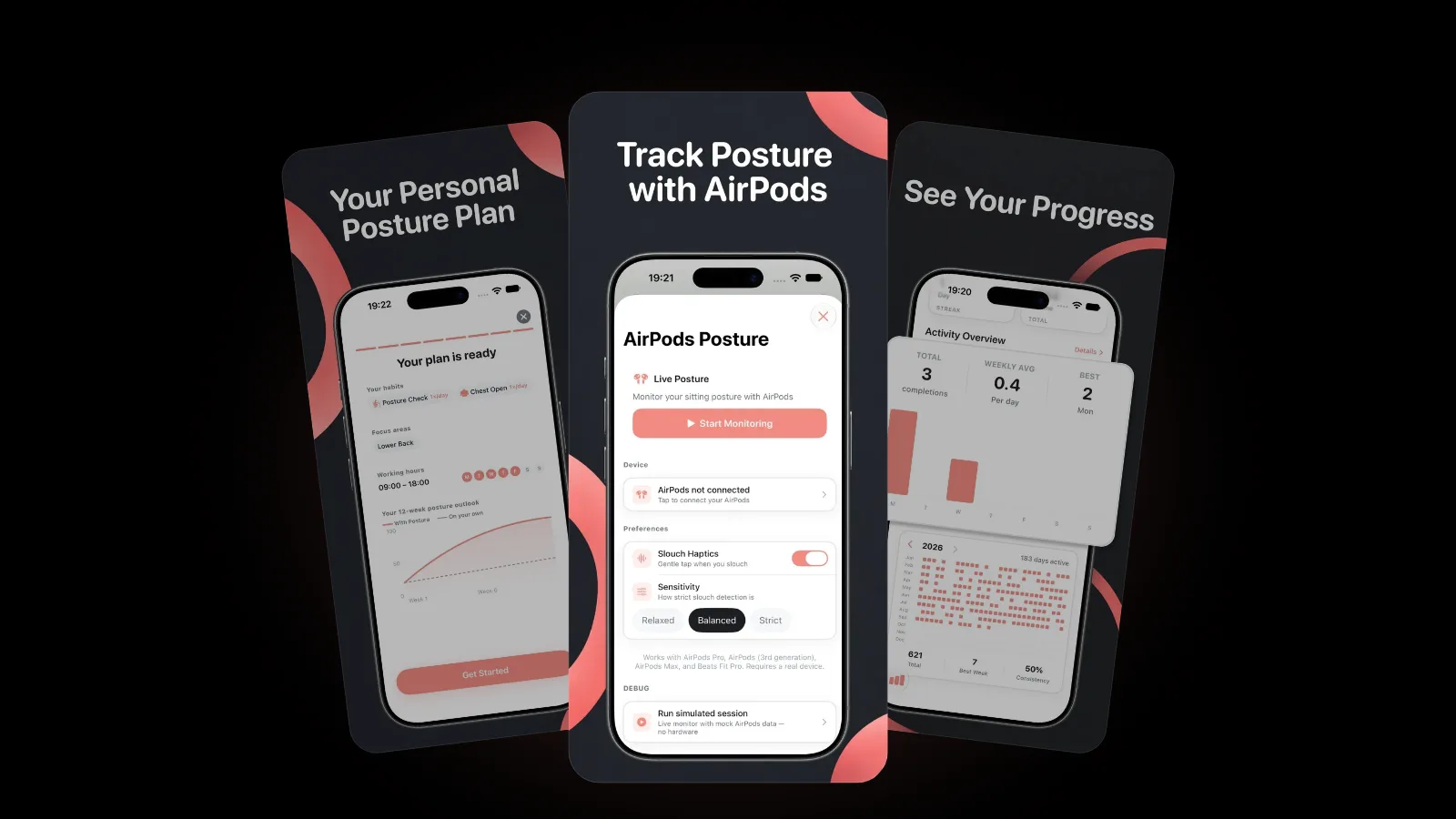
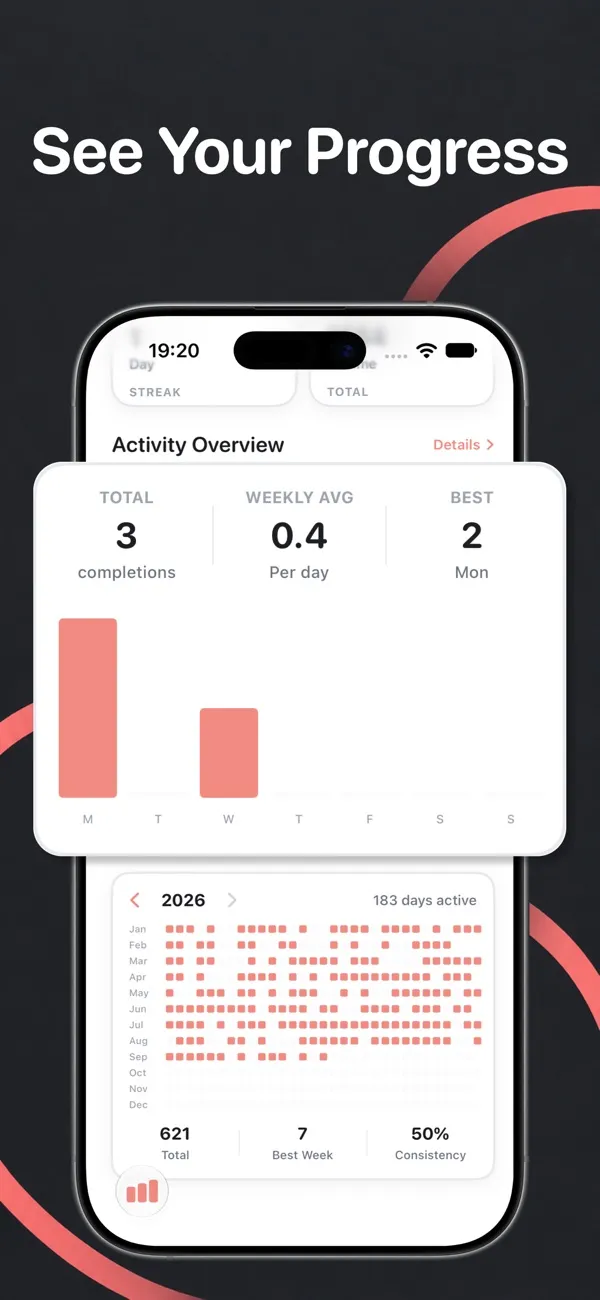
Whatever your desk, what matters is how often you change position. Postura's progress views show daily, weekly and yearly completions, so you can see whether the breaks are happening.
When should you see a doctor about lower back pain?
Most back pain improves within a few weeks, but some signs need a doctor. This table summarises the NHS back pain page, last reviewed on 05 March 2026:
| Sign | What the NHS says to do |
|---|---|
| No improvement after a few weeks of home treatment, or pain that stops your day-to-day activities | See a GP |
| Weight loss without trying, or pain that is worse at night | See a GP |
| Feeling hot, cold, shivery or unwell, or severe pain that starts suddenly or worsens quickly | Urgent GP appointment or call 111 |
| Pain, tingling, weakness or numbness in both legs | Call 999 or go to A&E |
| Loss of feeling around your genitals or anus, or changes in your bladder or bowels | Call 999 or go to A&E |
The NHS page lists more signs, including chest pain, so read it in full if you are unsure. Outside the UK, contact your own doctor or local emergency number.
FAQ
How long does back pain from sitting last?
The NHS says back pain usually improves within a few weeks, though it can last longer or come back. See a GP if it has not improved after a few weeks.
Should I use a lumbar cushion?
It can help if your chair does not support your lower back. HSE suggests a cushion for extra lower back support. It does not replace getting up and moving, though.
Is it better to stand or sit with back pain?
Neither, for hours at a time. A 2020 meta-analysis found prolonged standing at a desk did not give significantly less low back pain than sitting. NHS physiotherapy advice is not to stay in any one position for long, so alternate and take breaks.
Can an app fix back pain?
No, and Postura does not claim to; it is not a medical app. A reminder app helps with the hard part: remembering to stand up, walk and change position during the workday.
Get started
Postura is free to download on the App Store and on Google Play, with an optional Pro subscription. It reminds you to stand up, take short walks, check your posture and rest your eyes during the hours you choose. Postura is not a medical app; it is a gentle way to build better desk habits. See everything it does on the Postura page or read more Postura articles.