PosturaDesk habits8 min read
Micro breaks at work: what they are and how to take them
What micro breaks at work are, what a 2022 meta-analysis of 2,335 people found, how long and how often to take them, and ideas from 10 seconds up.
Micro breaks at work are short pauses of up to about 10 minutes that you take during a task, such as looking away from the screen, rolling your shoulders or standing up for a minute. Research links them to more energy and less fatigue, though their effect on how much you get done is small.
This guide covers what the research measured, how long and how often to break, and what to do in a minute or less. It ends with ways to remember, including the reminders in Postura, our app for posture checks and stretch breaks. This is general information, not medical advice. If pain, numbness or eye problems do not settle, see a doctor.
What is a micro break?
A micro break is a short pause from your task, taken during the working day rather than at lunch or after work. A 2022 systematic review and meta-analysis in the journal PLOS ONE, "Give me a break!", defined micro-breaks as "short discontinuities in one's tasks of no longer than 10 minutes." In practice, most are far shorter: 10 seconds with your eyes closed, 30 seconds of shoulder rolls, a minute walking to refill your water. The point is a brief change from what you were doing, so your eyes refocus, your muscles shift position and your attention resets. Micro breaks differ from scheduled breaks such as lunch, because you take them on the fly, usually without leaving your workspace for long. They also differ from switching to another task that keeps your mind just as busy, like clearing email. A good micro break gives your body or your attention something different to do.
Micro break, micro-break and microbreak all mean the same thing.
Do micro breaks actually work?
Yes for how you feel, and less clearly for how much you get done. In 2022, the PLOS ONE meta-analysis pooled 19 records, covering 22 independent samples and 2,335 participants. Micro breaks raised vigor and lowered fatigue by amounts the authors call small but statistically significant. The overall effect on performance was smaller and not significant.
An effect size, written as d, shows how big a difference is: the bigger the number, the bigger the effect.
| Outcome | Effect size (d) | What the review found |
|---|---|---|
| Vigor (feeling energetic) | 0.36 | Small, significant rise (9 studies, 913 people) |
| Fatigue | 0.35 | Small, significant drop (9 studies, 803 people) |
| Performance, overall | 0.16 | Not significant (15 studies, 1,132 people) |
| Performance, creative tasks | 0.38 | Small, significant gain |
| Performance, clerical tasks | 0.56 | Medium, significant gain, from only two studies |
| Performance, cognitively demanding tasks | -0.09 | Very small, not significant |
The authors conclude that micro-breaks "positively impact well-being by enhancing vigor and lowering fatigue." On output, they write that micro-breaks "do not seem to influence performance generally."
That is the honest summary. A 30-second pause will probably leave you feeling fresher, but it will not reliably make you faster at hard thinking work. The review has limits too: few studies per outcome, and nearly all results were self-reported. Feeling less drained by the afternoon is still a fair reason to take them.
How long should a micro break be?
Anywhere from a few seconds to about 10 minutes, the upper limit in the 2022 review's definition. Short pauses of 10 to 60 seconds suit the eyes, posture and breathing. The review also linked longer breaks to bigger performance gains, and warns that "recovering from highly depleting tasks may need more than 10-minute breaks."
A rough way to match the break to the work:
- 10 to 30 seconds: an eye break or posture reset between emails.
- 30 to 60 seconds: shoulder rolls, standing up or a few slow breaths.
- 5 to 10 minutes: a walk, a drink or some fresh air.
- More than 10 minutes: a real break after draining, focused work.
How often should you take breaks at work?
Often, and briefly. The UK Health and Safety Executive's guidance on work routine and breaks says "there is no legal guidance about how long and how often breaks should be" for screen work. Its rule of thumb: "Take short breaks often, rather than longer ones less often." For example, "5 to 10 minutes every hour is better than 20 minutes every 2 hours."
HSE adds that breaks should let you get up and move around, "or at least stretch and change posture," and that ideally you choose when to take them. The NHS physical activity guidelines point the same way, advising adults to "break up long periods of not moving with some activity."
Put together, a workable rhythm for a desk day looks like this:
- Every 20 minutes: a 20-second look into the distance, as the American Academy of Ophthalmology recommends. Our guide to the 20-20-20 rule for eye strain explains it.
- Each hour: a 30-second posture reset, plus 5 to 10 minutes away from the screen in total, in line with HSE's example.
- After demanding work: a longer break before the next hard task.
What should you do in a micro break?
Do the opposite of what you were doing: rest your eyes after screen work, move after sitting still, breathe after holding tension. The times are the default timers of Postura's built-in habits.
| Goal | Micro break | Time | How to do it |
|---|---|---|---|
| Eyes | Eye Relief | 10 s | Close your eyes and breathe deeply |
| Eyes | Screen Pause | 15 s | Look away from your screen and blink several times |
| Eyes | 20-20-20 | 20 s | Look at something at least 20 feet (about 6 meters) away |
| Posture | Posture Check | 30 s | Sit up straight, shoulders back, feet flat on the floor |
| Posture | Shoulder Drop | 30 s | Relax your shoulders down and back, away from your ears |
| Posture | Chest Open | 30 s | Pull your shoulder blades gently together |
| Posture | Neck Tilt | 30 s | Tilt your head slowly from side to side |
| Movement | Stand Up | 30 s | Stand up and stretch your legs |
| Movement | Shoulder Roll | 30 s | Roll your shoulders forward and backward 5 times each |
| Movement | Short Walk | 60 s | Take a quick walk around your space |
| Breath | Deep Breath | 30 s | Take 5 slow, deep breaths through your nose |
| Breath | Box Breathing | 40 s | Breathe in for 4, hold for 4, out for 4, hold for 4 |
Move only as far as is comfortable. For the posture rows, our guide to how to sit at a desk properly has a 60-second setup check. For a longer routine, try these desk stretches for neck and shoulders, and for the breath rows, see how box breathing works.
How do you remember to take micro breaks?
Focused work makes time vanish, so most people need a cue. Three approaches help:
- Habit anchors. Tie a break to something you already do: ending a call, sending a message, saving a file.
- Reminder software. HSE says "break-monitoring software can remind users to take regular breaks."
- Reminders that know your day. Prompts that follow your working hours are the easiest to keep.
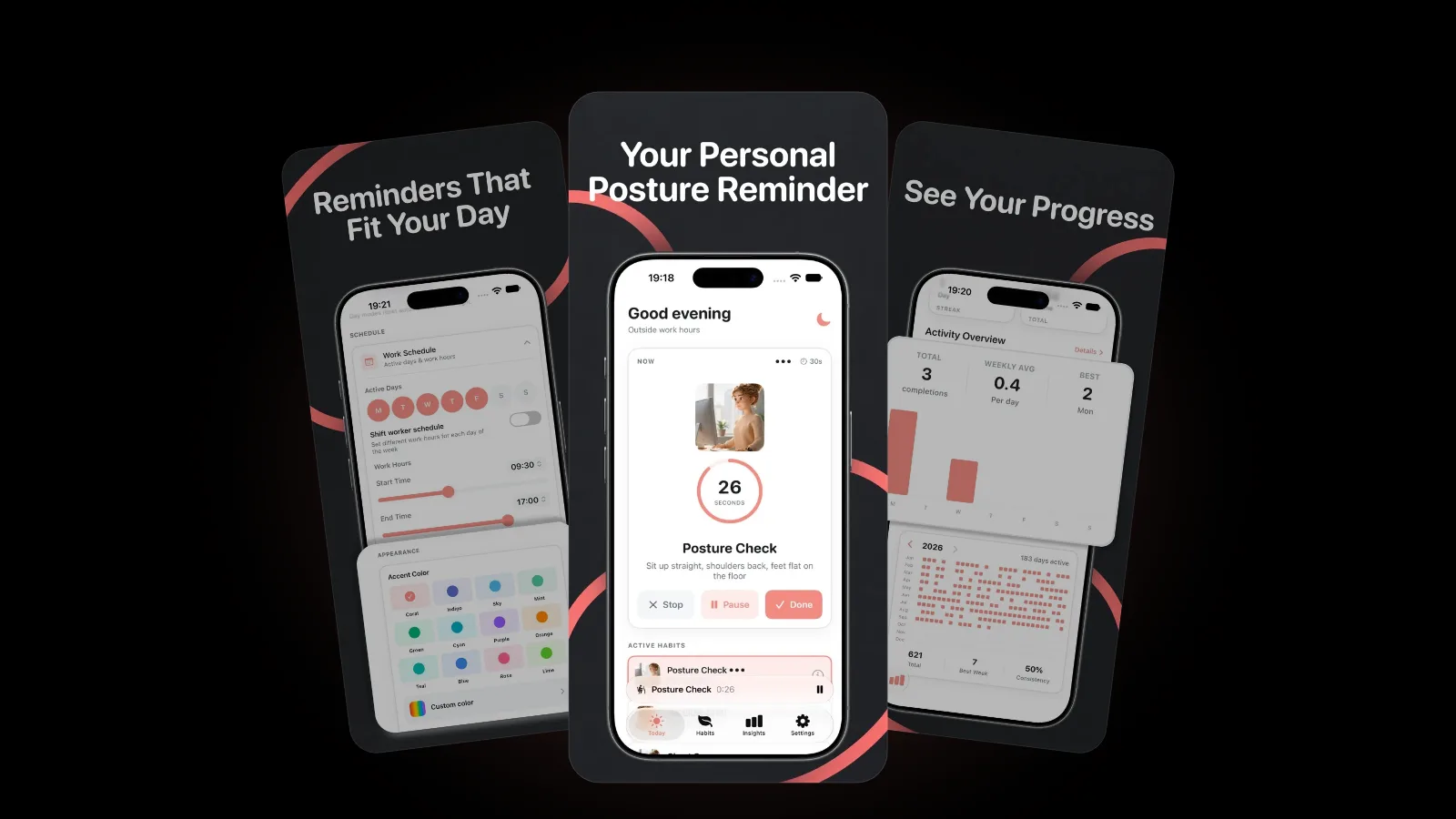
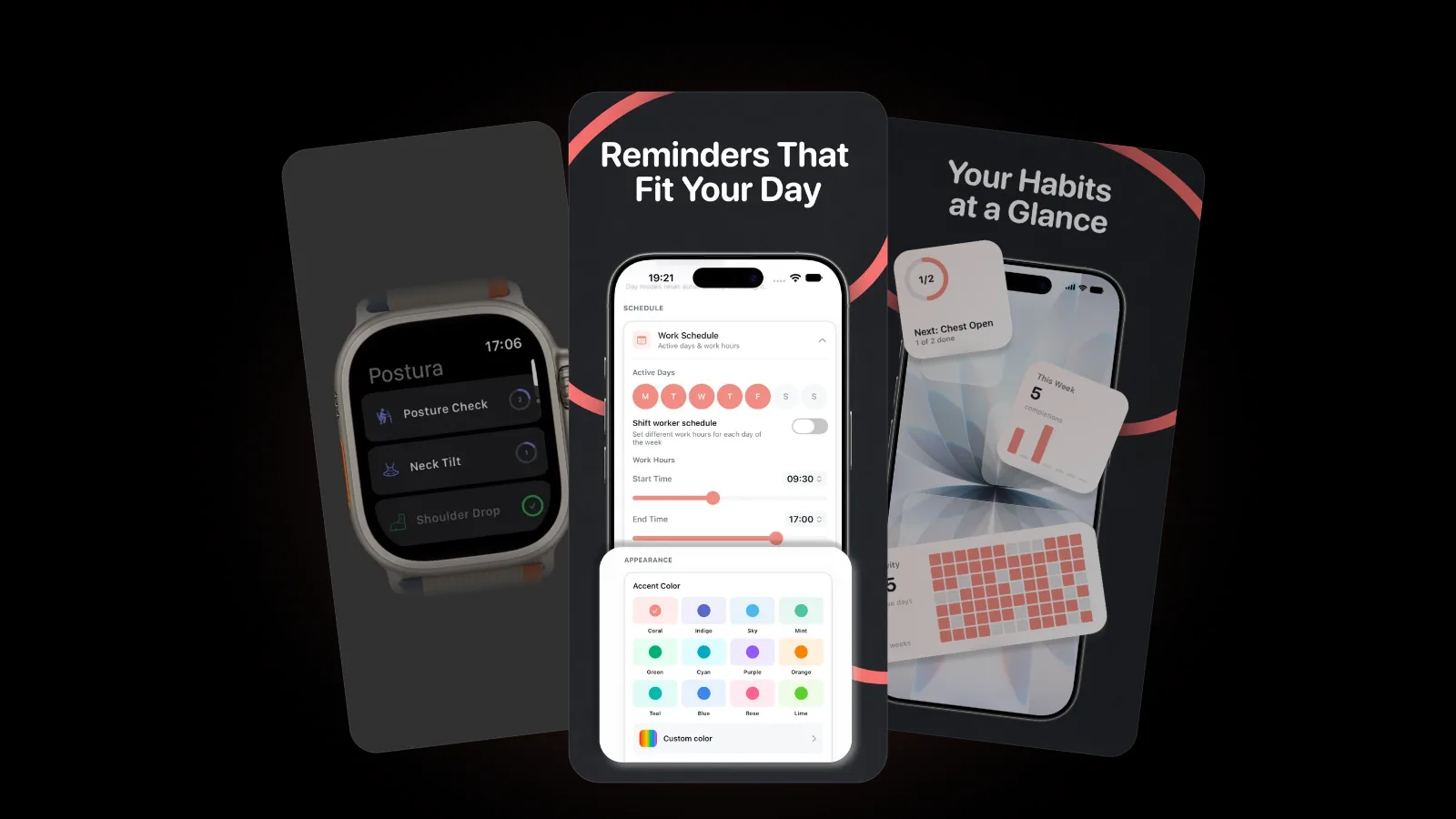
Postura is built around the last one. Reminders follow your working hours and active days, with shift schedules for days that differ. Each habit has its own reminder priority: Off, Low, Normal or High. When a notification arrives, you can tap "Mark as done" or, if the moment is wrong, "Remind me in 15 min". Reminders also pause automatically once you reach your goals.
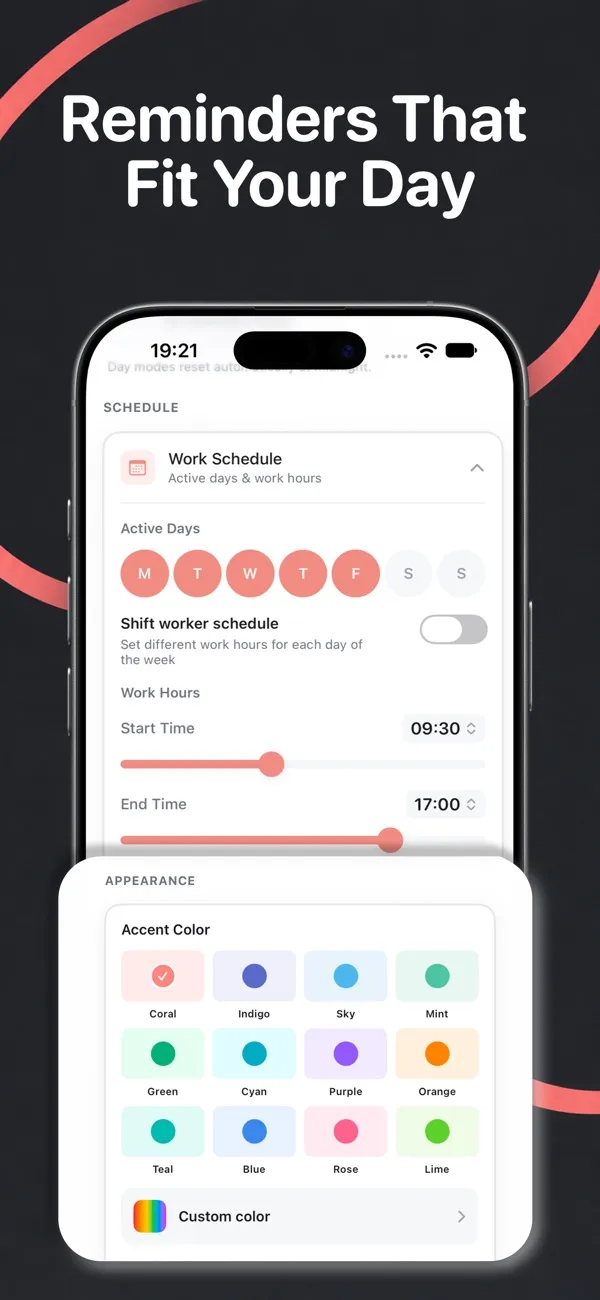
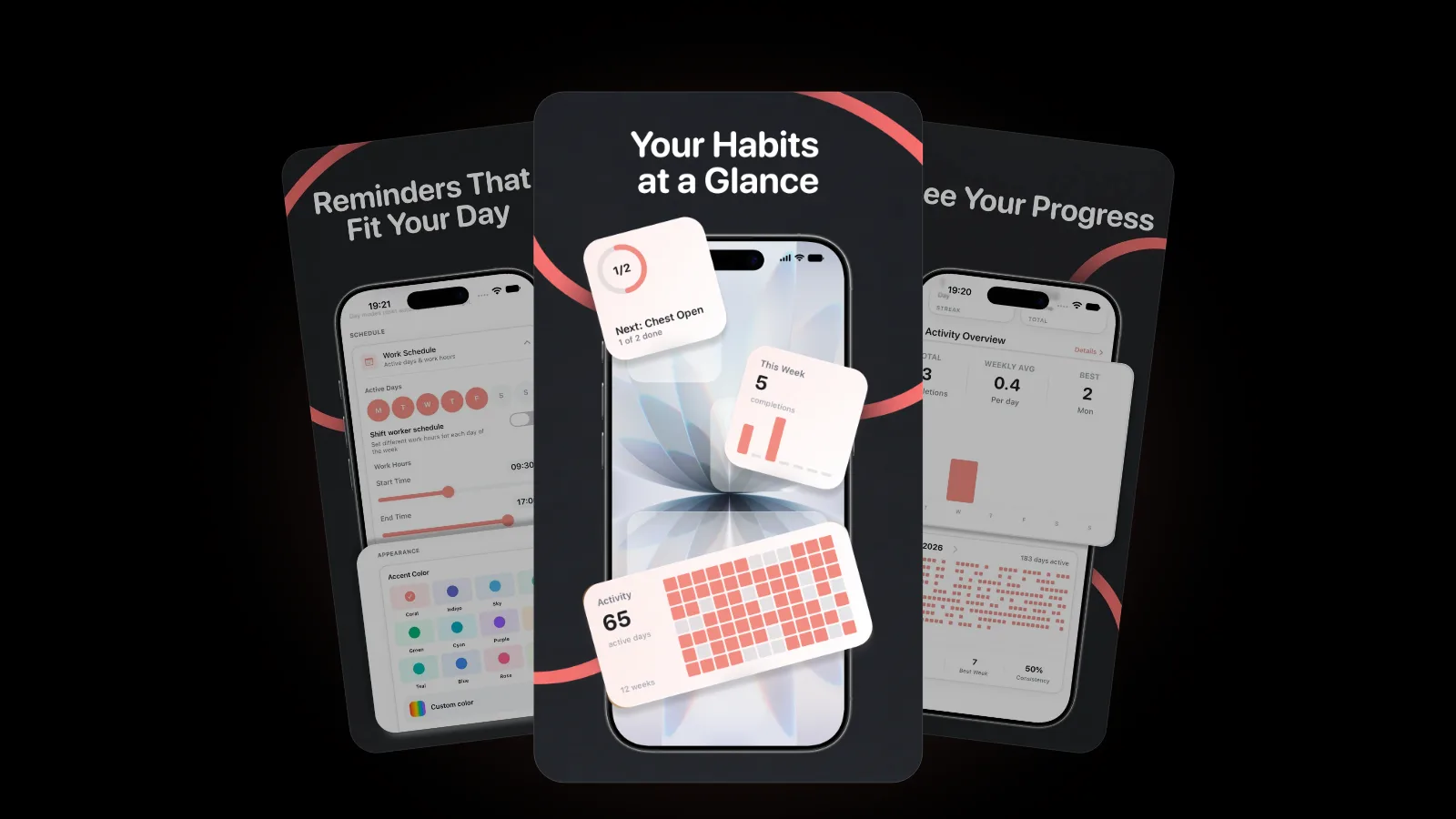
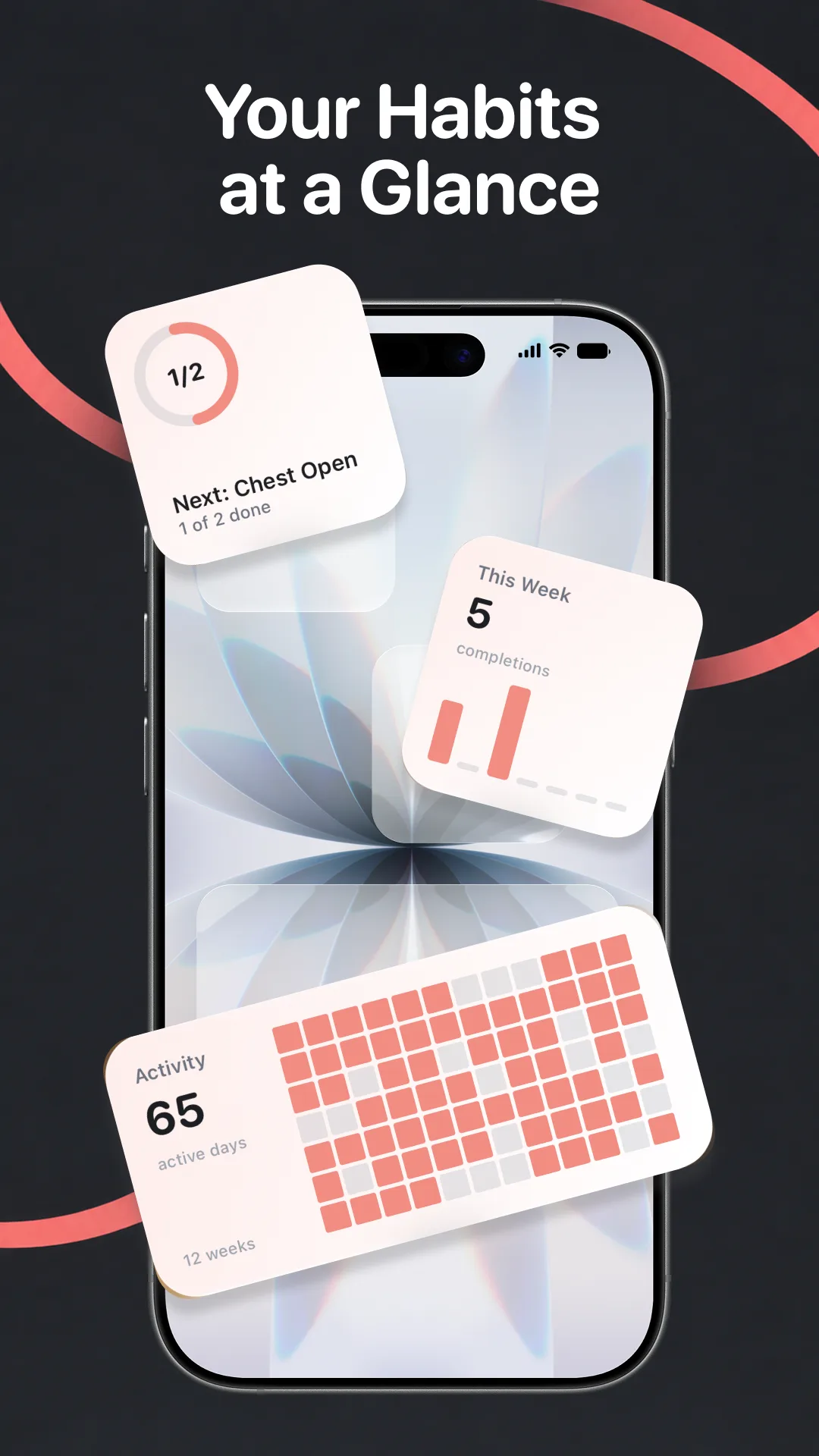
For unusual days, pick a day mode: Busy Day sends fewer reminders, Meeting-Heavy keeps interruptions minimal and Silent Day sends none. Day modes reset at midnight. On iPhone, a "Before you log off" nudge arrives 30 minutes before your work hours end and lists the habits still open. The Active Habits widget is free; the Weekly Activity and Activity Heatmap widgets are part of Postura Pro on iPhone. With an Apple Watch, you can set up a posture reminder on Apple Watch so breaks land on your wrist.
FAQ
Are micro breaks the same as the Pomodoro technique?
Not quite. The Pomodoro technique is a time management method built on fixed work blocks with short breaks between them. Micro breaks are any pause of up to about 10 minutes, taken when it fits. A Pomodoro timer can schedule them, but you do not need a fixed system.
Does checking your phone count as a break?
It pauses the task, but keeps your eyes on a close screen and often your head bent forward. HSE says breaks should let you move, or at least stretch and change posture, and the American Academy of Ophthalmology suggests looking into the distance. Pair the scroll with one of those.
Can micro breaks reduce eye strain?
Short eye breaks are a common recommendation. The American Academy of Ophthalmology advises the 20-20-20 rule and notes that people blink less while using screens than the usual 15 times a minute. A 15-second pause to look away and blink covers both.
Do micro breaks make you more productive?
Not reliably. In the 2022 meta-analysis, the overall effect on performance was small and not statistically significant, with gains only on less demanding tasks such as creative or clerical work. The clearer benefit is feeling more energetic and less fatigued.
Get started
Postura is free to download on the App Store for iPhone and Apple Watch, and on Google Play for Android, with an optional Pro subscription. It brings 12 short breaks for your eyes, posture, movement and breathing into the hours you choose. Postura is not a medical app; it is a gentle way to build better desk habits. See everything it does on the Postura page or read more Postura articles.