SunDoseSun safety9 min read
Medications that cause sun sensitivity, and skincare too
Medications that cause sun sensitivity include antibiotics, NSAIDs, diuretics and retinoids. See the FDA's list, risky skincare and how to protect skin.
Many common medicines can make your skin burn faster. The FDA lists antibiotics, antifungals, antihistamines, cholesterol-lowering drugs, diuretics, NSAIDs such as ibuprofen, oral contraceptives, retinoids and more. Skincare can do it too, mainly retinoids and exfoliating acids. Not everyone reacts, and the answer is more sun protection, not stopping your medicine.
Below: the FDA's drug classes, the skincare ingredients the FDA and dermatologists name, the two kinds of reaction and how to plan time outdoors. We make SunDose, an iPhone app that times sun sessions to your skin type, the UV index and your SPF, and lets you flag sensitivities like these. This is general information, not medical advice. If you're unsure about a medicine you take, ask your pharmacist or prescriber.
What is photosensitivity?
Photosensitivity is a chemically induced change in the skin that makes you more sensitive to sunlight. That's how the US Food and Drug Administration describes it in its consumer guide, Sun and your medicine, which says it can cause sunburn-like symptoms, a rash or other unwanted side effects. The trigger can be a product you put on your skin or a medicine you swallow or inject. Natural sunlight can set it off, and so can artificial UV light such as a tanning booth. The Skin Cancer Foundation adds that some medical conditions, including autoimmune diseases like lupus, can also make you hypersensitive to UV. Two points matter. First, not everyone who takes a photosensitizing medicine reacts, and the FDA notes that reacting once does not guarantee you'll react the next time. Second, the usual fix is extra sun protection and a quick word with your pharmacist, not stopping a medicine on your own.
Phototoxic vs photoallergic: what is the difference?
A phototoxic reaction is an irritation of the skin and the more common type. A photoallergic reaction is an allergic response that shows up later. According to the FDA, phototoxicity can appear within a few hours of sun exposure, while photoallergy may not appear until several days afterwards. The Skin Cancer Foundation describes the same split:
| Phototoxic reaction | Photoallergic reaction | |
|---|---|---|
| How common | The more common type | Far less common |
| What causes it | A drug in your body or on your skin reacts with UV light and damages the skin | UV interacts with an ingredient, and the immune system treats the change as a foreign threat |
| When it shows up | Within minutes to hours of sun exposure | One to three days later (the FDA says it may take several days) |
| What it looks like | Like a sunburn or a rash, usually only on skin that was exposed | A rash, blisters, red bumps or even oozing lesions |
Timing is the clearest difference. A phototoxic reaction arrives the same day, while a photoallergic rash can turn up days later, so it's easy not to connect it with the sun. Both need UV to start, the FDA says, so shade, clothing and sunscreen help with either.
Which medications can cause sun sensitivity?
The FDA names 12 types of medicine that can cause sensitivity to the sun, plus alpha hydroxy acids in cosmetics. The examples are the FDA's own, and it presents them as some, not all, of the medicines involved.
| Medicine type | Examples the FDA names |
|---|---|
| Antibiotics | Ciprofloxacin, doxycycline, levofloxacin, ofloxacin, tetracycline, trimethoprim |
| Antifungals | Flucytosine, griseofulvin, voriconazole |
| Antihistamines | Cetirizine, diphenhydramine, loratadine, promethazine, cyproheptadine |
| Cholesterol-lowering drugs | Simvastatin, atorvastatin, lovastatin, pravastatin |
| Diuretics | Hydrochlorothiazide, chlorthalidone, chlorothiazide, furosemide, triamterene |
| NSAIDs | Ibuprofen, naproxen, celecoxib, piroxicam, ketoprofen |
| Oral contraceptives and estrogens | The FDA names the class only |
| Phenothiazines | Chlorpromazine, fluphenazine, promethazine, thioridazine, prochlorperazine |
| Psoralens | Methoxsalen, trioxsalen |
| Retinoids | Acitretin, isotretinoin |
| Sulfonamides | Acetazolamide, sulfadiazine, sulfamethizole, sulfamethoxazole, sulfapyridine, sulfasalazine, sulfisoxazole |
| Sulfonylureas for type 2 diabetes | Glipizide, glyburide |
The Skin Cancer Foundation points to the same families, naming antibiotics, NSAIDs, antihistamines, certain heart medicines and statins for lowering cholesterol. Take doxycycline: its NHS medicine page lists skin becoming more sensitive to the sun, with a rash, itching and redness, among its serious side effects.
So should you worry if your prescription is on the list? Not on its own. The same NHS page says to keep taking your medicine unless you're advised to stop. Treat the table as a reason to ask your pharmacist, not to skip a dose.
Which skincare ingredients make skin more sun sensitive?
Retinoids and exfoliating acids are the main ones. In research the FDA describes on its alpha hydroxy acids page, four weeks of AHA use made volunteers' skin 18 percent more sensitive to UV reddening, and their sensitivity to UV-induced cellular damage doubled on average.
- Retinoids and retinol. The American Academy of Dermatology (AAD) page Retinoid or retinol? says retinoids can make skin more sensitive to sun, and advises using them only at night, with sun protection by day.
- AHAs, such as glycolic and lactic acid. The FDA recommends a "sunburn alert" on AHA products: use a sunscreen, wear protective clothing and limit sun exposure while using the product and for a week afterwards.
- BHA (salicylic acid). The FDA's beta hydroxy acids page is short and direct: use sun protection if you use a BHA product.
- Hydroquinone and some prescription creams. The Skin Cancer Foundation article Is your beauty routine making you photosensitive? adds hydroquinone, and says some prescription creams, such as antibiotic or antifungal ones, can cause photosensitivity as well.
The same article notes that sunlight makes retinol less effective, so keeping UV off your skin protects the product too. Check packs for a "sunburn alert", and ask a dermatologist if you're unsure about something in your routine.
What does a medication sun reaction look like?
Most often it looks like a sunburn that came on too quickly, or a rash on skin that saw the sun. The FDA describes sunburn-like symptoms and rashes. The NHS lists a rash, itching and redness for doxycycline, and notes these may be harder to see on brown or black skin.
A photoallergic sun rash from medication can also bring blisters or red bumps, sometimes days after you were outside. The Skin Cancer Foundation advises seeing a doctor if your skin blisters or if you develop flu-like symptoms, such as fever with chills, nausea, headache and weakness.
If you think a medicine is behind a reaction, tell your pharmacist or prescriber rather than stopping it yourself. For burned skin, see how to treat sunburn.
How do you protect your skin while taking them?
Use several layers of protection at once. The FDA advises seeking shade, especially between 10 a.m. and 2 p.m., and notes that some organizations recommend as late as 4 p.m. Add long sleeves, pants, sunglasses and a broad-brimmed hat, plus a broad-spectrum sunscreen of SPF 30 or higher.
- Ask first. Check the leaflet, and ask your pharmacist whether your medicine carries a sun warning.
- Plan around the peak. Look at the UV index before you head out, and save long spells outdoors for lower-UV hours.
- Cover up. Unlike sunscreen, clothing and a hat don't need reapplying.
- Apply sunscreen properly. The AAD's isotretinoin skin care advice is to apply it to all skin not covered by clothing and reapply at least every 2 hours, and after swimming or sweating.
- Watch reflections. The FDA notes that the sun's rays may be stronger when reflected off water, sand and snow.
- Skip artificial UV. Both types of reaction can follow UV from a tanning booth, not just the sun.
- Move actives to the evening. Apply retinoids at night, as the AAD advises.
A medicine doesn't change the UV index. It changes how your skin responds, so a forecast that felt fine last month may burn you faster now. Burn speed also depends on skin type and UV level, covered in how long it takes to get sunburned and our guide to Fitzpatrick skin types. If you're choosing a sunscreen, see SPF 30 vs 50.
How does SunDose adjust for sensitivities?
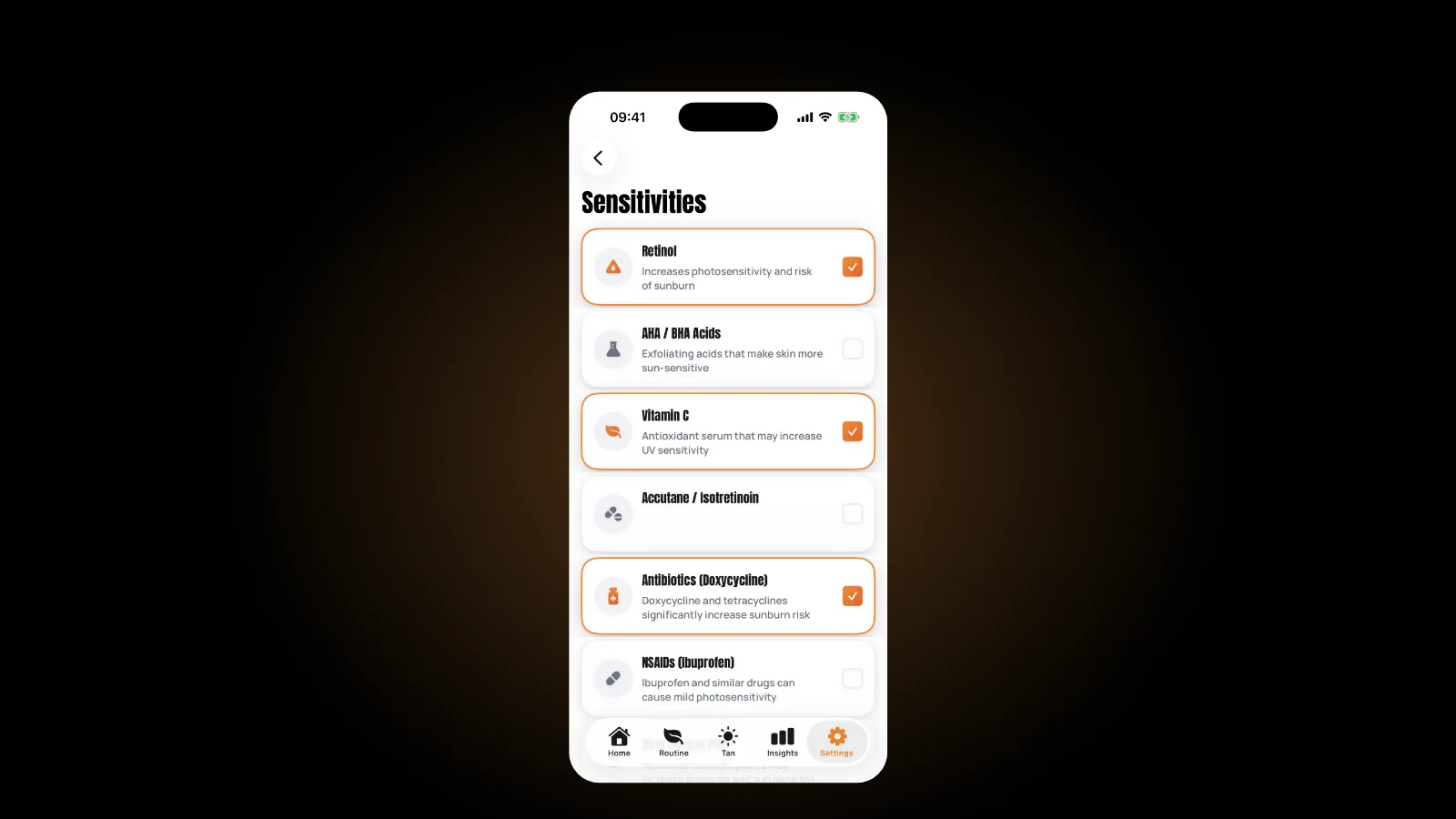
You flag sensitivities once in your profile, and SunDose shortens the session lengths it suggests. The app covers retinoids, exfoliating acids, isotretinoin and tetracycline antibiotics such as doxycycline, and its App Store listing says it recognizes 11 or more photosensitizing conditions and medications.
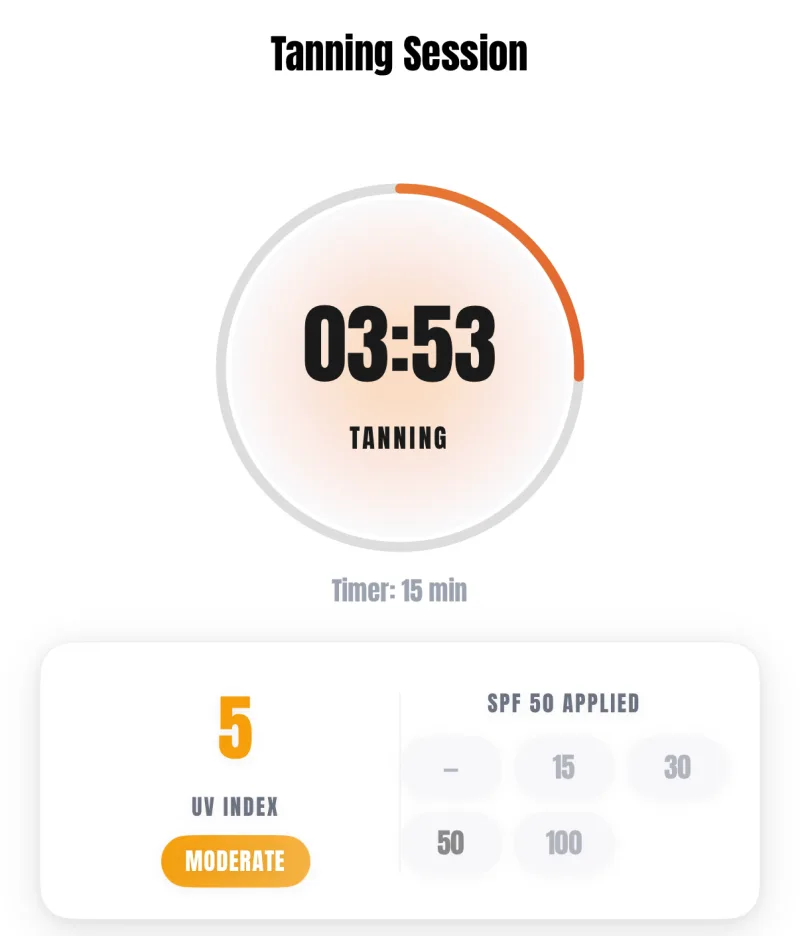
Each suggestion in SunDose comes from your skin type, the live UV index for your location from Apple WeatherKit and the SPF you say you applied. Sessions run from 1 to 180 minutes. Reapply prompts follow the session clock, and each session logs itself. Routine suggestions take your sensitivities into account too. Your profile and history stay on your device, with no ad tracking.
A shorter suggestion is a planning aid, not a guarantee. SunDose doesn't know your dose, and it can't tell whether your skin will react. It records reported UV and time; it isn't a dosimeter. If your prescriber or a label tells you to avoid the sun, that advice comes first.
FAQ
Does ibuprofen make you sensitive to the sun?
It can. The FDA lists ibuprofen among the NSAIDs that can cause sun sensitivity, along with naproxen, celecoxib, piroxicam and ketoprofen. The FDA also says not everyone who takes these medicines reacts. If you take it often and spend long days outside, ask your pharmacist.
Can I use retinol in summer?
The AAD's advice focuses on timing and protection. It advises using retinoids only at night and always using sun protection during the day: shade, sun-protective clothing such as a wide-brimmed hat, and sunscreen on all skin that clothing doesn't cover.
How long does sun sensitivity last after you stop?
It depends on the product. The AAD says isotretinoin's sun sensitivity goes away once you stop taking it. For AHAs, the FDA advises extra sun protection for a week after use, and its research found no significant difference in UV sensitivity one week after treatment ended. For other medicines, ask your pharmacist.
Should I stop my medicine before a sunny holiday?
No, not on your own. The NHS advice for doxycycline is to keep taking your medicine unless you're advised to stop. Talk to your prescriber or pharmacist before you travel, and plan for shade, clothing and SPF 30 or higher instead.
Get started
SunDose is free to download on the App Store, with optional premium tiers. The live UV index, hourly forecast and session timer work without a subscription, on iPhone with iOS 26 or later. Flag the medicines and skincare that make you sun sensitive, and its suggestions shorten to match. SunDose is a wellness app, not a medical device, so keep your pharmacist in the loop. Read more SunDose guides.