SunDoseVitamin D9 min read
How much sun do you need for vitamin D without burning?
The NHS says most people make enough vitamin D from sunlight from late March to September, but not in winter. Why skin tone matters and when to supplement.
Short spells are enough, and you never need to tan or burn. The NHS says most people make all the vitamin D they need from sunlight between late March or early April and the end of September. From October to early March, sunlight is not strong enough, so it advises everyone to consider a daily 10 microgram supplement.
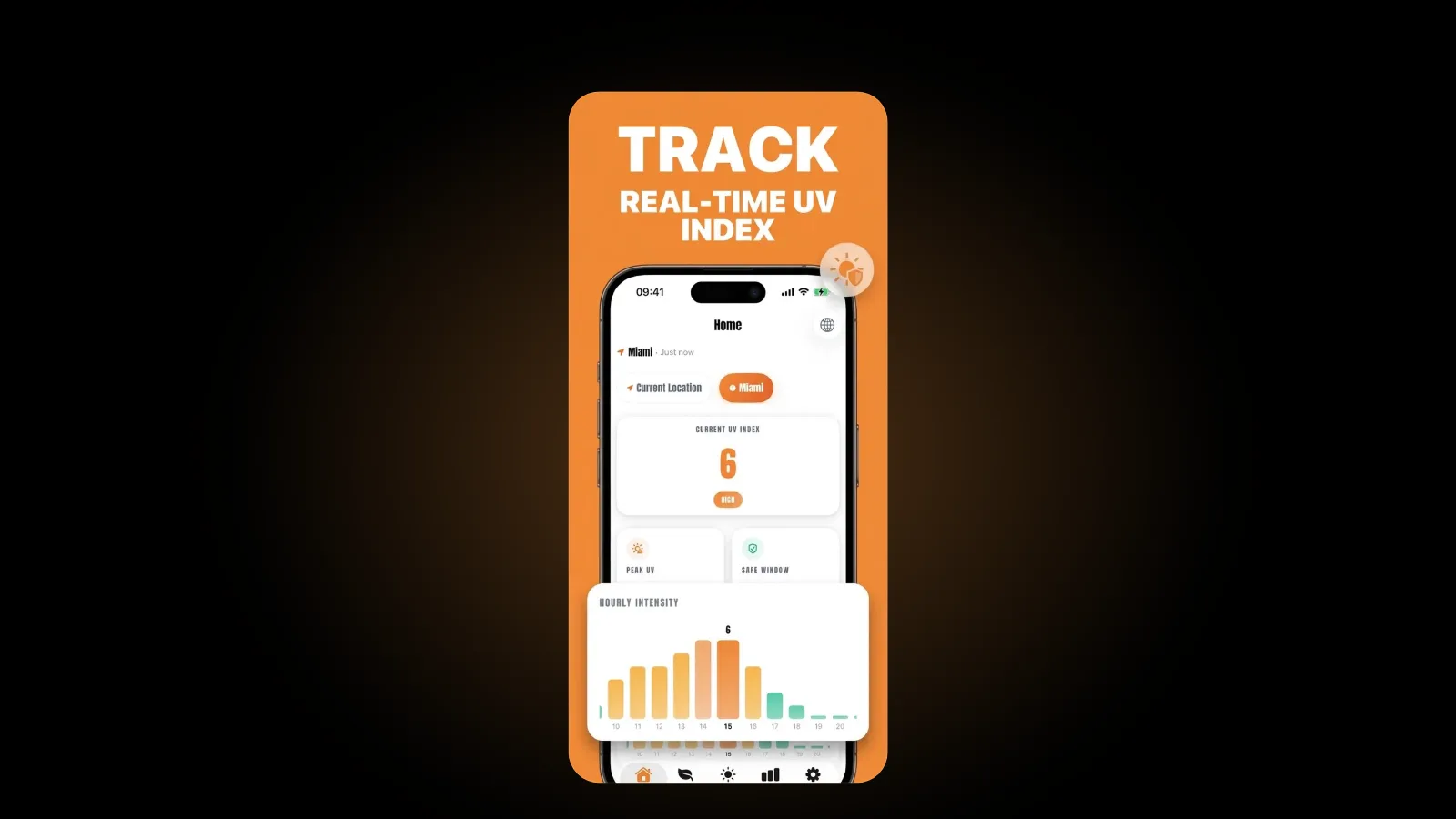
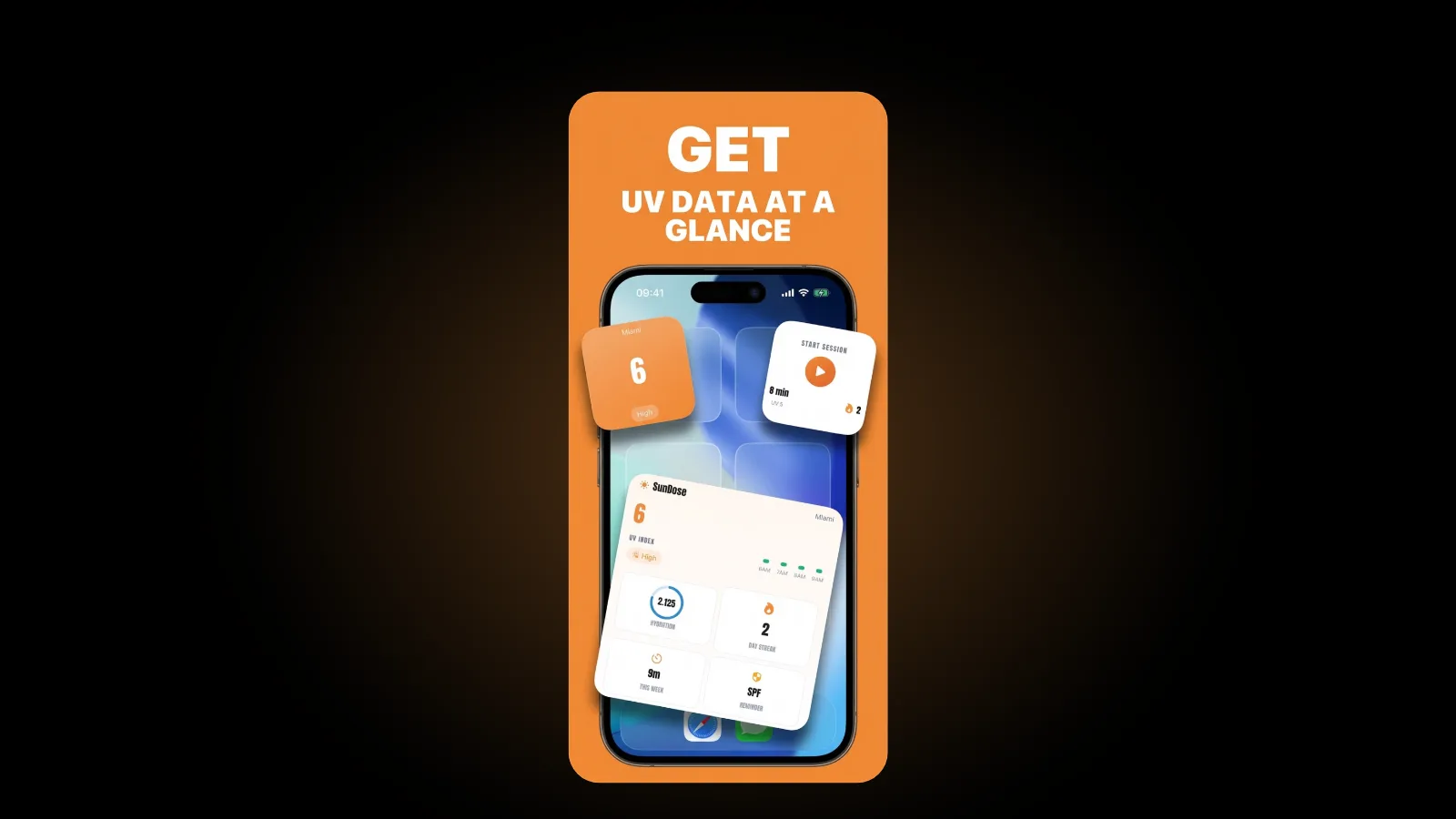
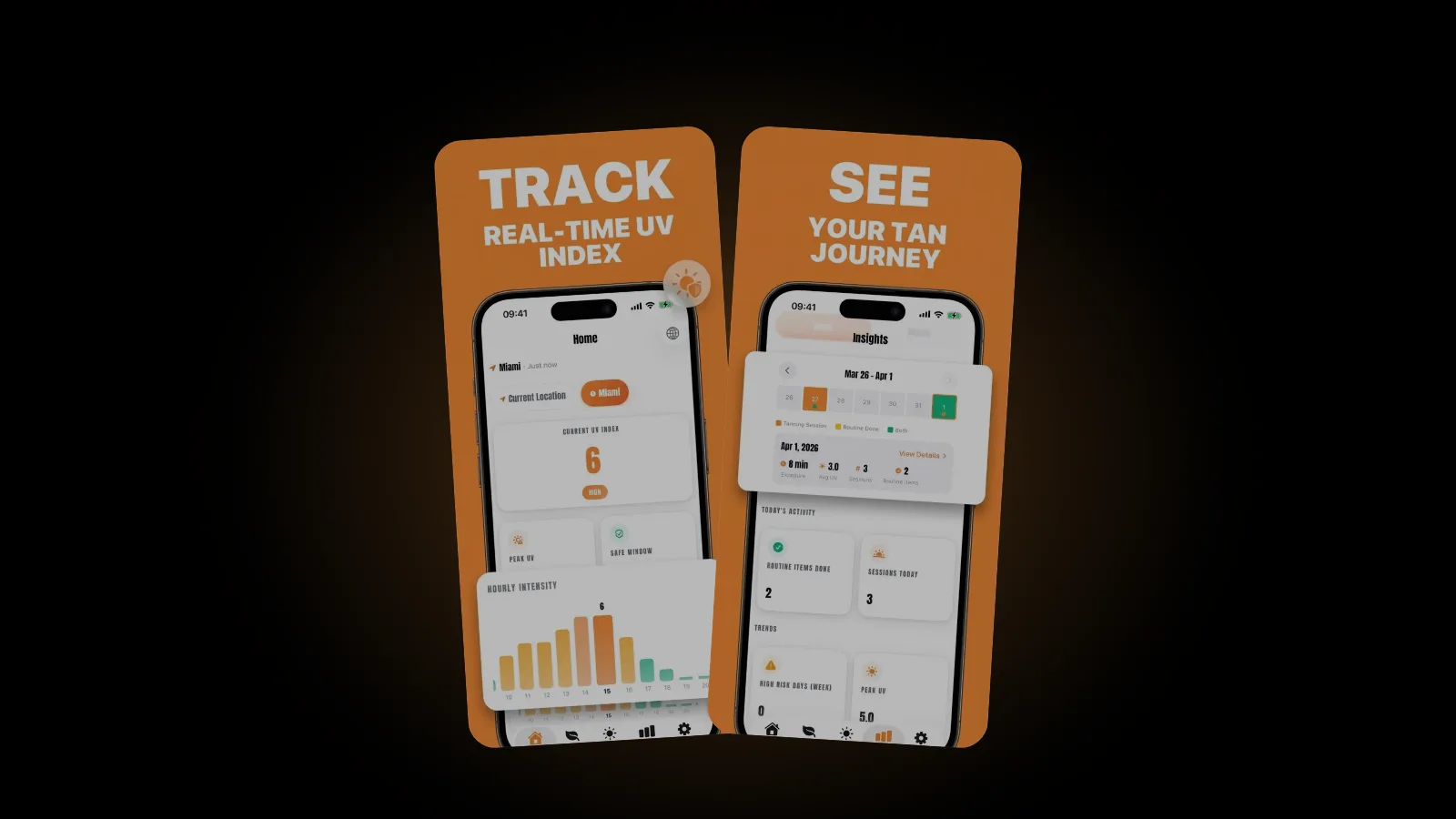
We make SunDose, an iPhone app that shows the live UV index and records your time in the sun. Search this question and the minute counts don't agree, so this guide starts with the official advice, explains why season, latitude and skin tone change it, and treats study figures as context, not targets. This is general information, not medical advice.
How does sunlight make vitamin D?
Vitamin D starts with UVB. The World Health Organization says vitamin D production is stimulated by UV-B radiation, and calls it the only beneficial effect of UV. A 1988 study in the Journal of Clinical Endocrinology and Metabolism describes the chemistry: UVB turns 7-dehydrocholesterol in the skin into previtamin D3, which becomes vitamin D3.
Here's the catch: the WHO also names UVB as the primary cause of sunburn. The Skin Cancer Foundation notes that the same wavelengths that make vitamin D cause sunburn and the mutations that can lead to skin cancer, and that it doesn't take much sun to produce vitamin D. Our UVA vs UVB guide explains the difference.
How much sun do you need for vitamin D?
There is no single number, and official guidance avoids giving one. The NHS says that from about late March or early April to the end of September, most people should be able to make all the vitamin D they need from sunlight on their skin. Cancer Research UK puts the UK window at mid-March to mid-October and says short breaks in the sun should be enough for most people, adding that the amount depends on skin tone and the time of day or year. The WHO offers a rule of thumb: healthy people make enough vitamin D by exposing the face, hands and arms, uncovered and without sunscreen, two to three times a week for half the time it would usually take unprotected skin to burn. For sensitive skin (type II) at a UV index of 7, it puts that at around 12 minutes. Every version of the answer stops well short of burning, and none of them involves a tan.
Researchers have put minute figures on this for specific groups. Read them as context, not a prescription:
| Source | Group and setting | Estimate |
|---|---|---|
| WHO, 2024 | Skin type II, UV index 7 | Around 12 minutes, 2 to 3 times a week |
| Nutrients, 2018 | White adults, UK | 9 minutes daily at lunchtime, March to September |
| Nutrients, 2018 | Skin type V (brown) adults, UK | About 25 minutes daily at lunchtime, March to September |
| Nutrients, 2024 | Noon sun at the equator | 3 minutes (white skin) to 15 minutes (black skin) |
The 9-minute figure, from a 2018 UK study, is the time calculated to keep vitamin D up through winter without sunburn, assuming forearms and lower legs are bare from June to August. Hands and face alone all summer did not meet requirements. The authors of the 2024 global estimates say theirs are not a sun exposure prescription but a way to show where food and supplements are needed. For burn times, see how long it takes to get sunburned.
Why do season, latitude and the UV index matter?
They decide how much UVB reaches you. In the 1988 study, skin exposed to cloudless winter sunlight at 42 degrees north made no previtamin D3 from November through February; at 52 degrees north, the gap ran from October through March. The 2024 model found that above 40 degrees north or south, lack of sunlight limits vitamin D production in some months for everyone. That covers all of the UK and Canada and much of Europe and the northern US.
What about the best time of day for vitamin D? A 2007 study notes that production depends on skin pigmentation and on the sun's angle, which changes with latitude, season and time of day. The UK estimates assume lunchtime, when the sun is highest. That is also when protection matters most: Cancer Research UK advises spending time in the shade, especially between 11am and 3pm in the UK, and the WHO recommends sun protection from a UV index of 3.
Does skin tone change how much you make?
Yes. Melanin absorbs UV, which protects skin but leaves less UVB for vitamin D. The WHO says people with darker skin require more solar UV exposure to maintain adequate vitamin D levels, which may make them more susceptible to deficiency at high latitudes. The authors of the 2018 study behind the 25-minute estimate concluded that, for practical and cultural reasons, higher oral intake should be considered for skin type V adults in the UK.
The NHS says people with dark skin, for example from an African, African-Caribbean or south Asian background, may not make enough vitamin D from sunlight, and should consider a 10 microgram supplement all year.
Protection still matters. The WHO says that regardless of skin colour, the risk of DNA damage, skin ageing and eye damage remains. Cancer Research UK says that whatever your skin tone, there's no need to sunbathe or risk getting sunburn to get vitamin D. Our Fitzpatrick skin types guide explains the six-point scale.
Does sunscreen or a window block vitamin D?
Sunscreen reduces vitamin D in the lab, but real-world studies mostly find no effect. Glass is different: it blocks most of the UVB that vitamin D needs.
- Sunscreen. A 2019 review in the British Journal of Dermatology found that sunscreen cut vitamin D production under artificial UV, but field trials of daily use (with SPF around 16) found no effect, and observational studies mostly found no link. No trials had yet tested today's high-SPF products.
- Real-world SPF. The Skin Cancer Foundation says clinical studies have never found that everyday sunscreen use leads to vitamin D insufficiency. SPF 50 filters out 98 percent of UVB, and most people apply less than the amount used in testing. Our SPF 30 vs 50 guide explains the numbers.
- Windows. Cancer Council Australia says all types of commercial and automobile glass block the majority of UVB, while UVA transmission depends on the glass. The NHS describes vitamin D being made from direct sunlight on the skin when outdoors.
- Sunbeds. The WHO says artificial tanning should never be considered as an option to achieve sufficient vitamin D status. Our base tan myth piece explains why sunbeds don't protect you either.
When should you take a vitamin D supplement instead?
In the NHS approach, sunlight and supplements share the year: sunlight in spring and summer, a supplement in autumn and winter, and all year for some groups.
| Who | What the NHS advises |
|---|---|
| Most adults and children over 4 | Late March or April to September: sunlight and a balanced diet are usually enough. October to early March: consider 10 micrograms a day |
| People rarely outdoors, in a care home, or who usually cover most of their skin | 10 micrograms a day throughout the year |
| People with dark skin | Consider 10 micrograms a day throughout the year |
| Children aged 1 to 4 | 10 micrograms a day throughout the year |
The NHS also says adults should not take more than 100 micrograms (4,000 IU) a day, as it could be harmful, and to follow your doctor if they recommend a different amount. In the US, the Skin Cancer Foundation supports a recommended allowance of 600 IU a day for ages 1 to 70 and 800 IU from age 70.
Think you might be low? The WHO says vitamin D deficiency should only be medically diagnosed and treated, so ask your doctor rather than estimating from minutes outdoors.
How does SunDose record your time in daylight?
SunDose saves each session to Apple Health as time in daylight and UV exposure, with an optional estimated vitamin D figure. It's an estimate, not a blood test, and the app doesn't tell you your vitamin D level or what to take. What it does do:
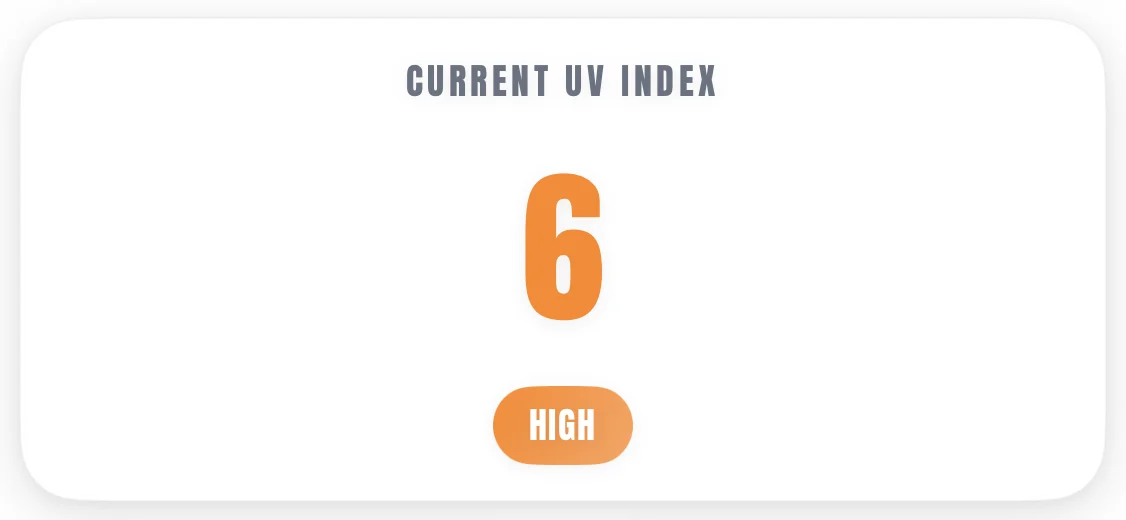
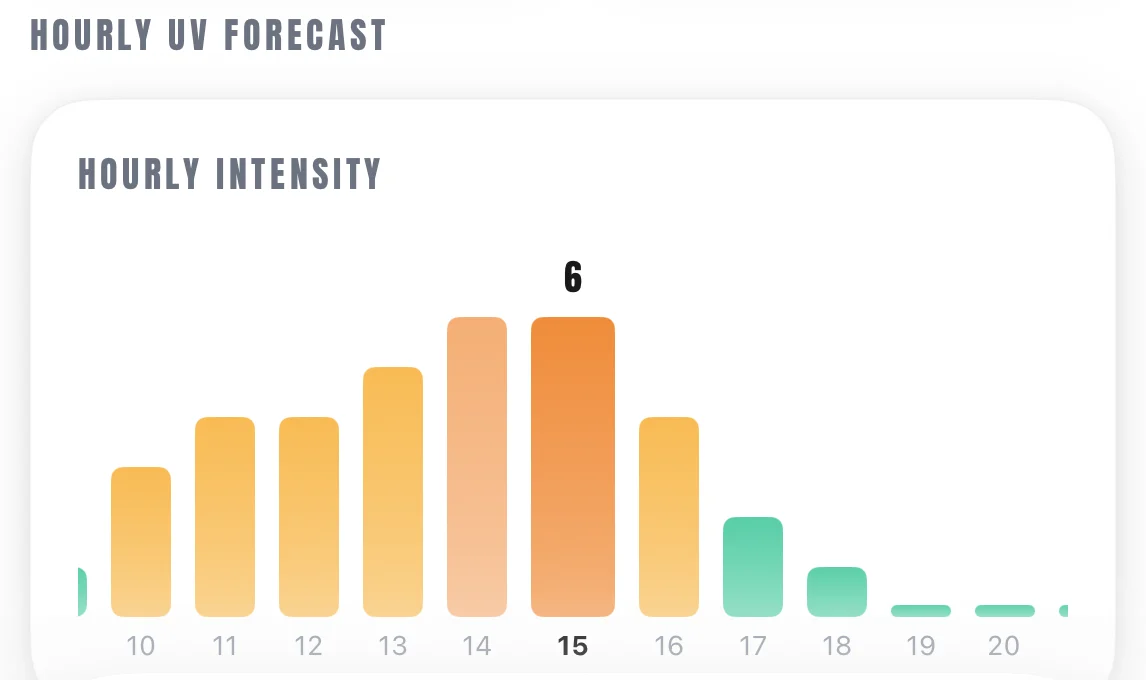
- Shows the live UV index for your location, with an hourly forecast from Apple WeatherKit.
- Runs a session timer from 1 to 180 minutes, with a suggested length based on your skin type, the current UV and the SPF you say you applied.
- Logs sessions automatically, and lets you add one after the fact.
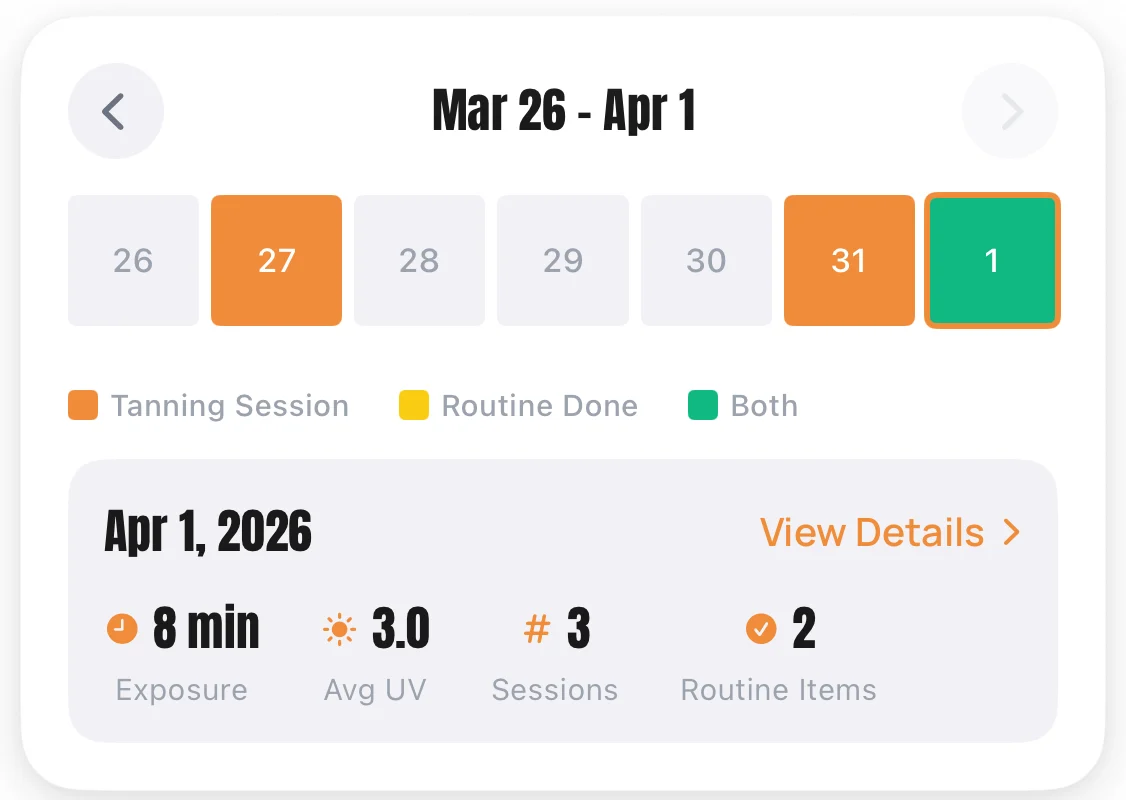
- Keeps Insights: total minutes, average UV, higher-risk days, a 30-day calendar and streaks.
Your data stays on your device, with no ad tracking, and the app records reported UV and time; it is not a dosimeter.
FAQ
Can you get too much vitamin D from the sun?
No. The NHS says you cannot overdose on vitamin D through exposure to sunlight, but it adds a reminder to cover up or protect your skin during long periods outdoors to reduce the risk of skin damage and skin cancer. Too much from supplements is possible, which is why the NHS sets a 100 microgram daily limit for adults.
Do you need to tan to get vitamin D?
No. Cancer Research UK says you don't need to sunbathe, and that short breaks in the sun should be enough for most people between mid-March and mid-October. The WHO says artificial tanning should never be considered as a way to get enough vitamin D, and the Skin Cancer Foundation notes that tanning beds give mainly UVA, not UVB.
Can you make vitamin D in winter?
Not enough in the UK. The NHS says that between October and early March, we do not make enough vitamin D from sunlight, and that everyone should consider a daily 10 microgram supplement during autumn and winter. Closer to the equator, research shows sunlight can still produce vitamin D in midwinter.
Does SunDose tell you your vitamin D level?
No. SunDose can save an optional estimated vitamin D figure to Apple Health alongside your time in daylight and UV exposure, but it is an estimate based on reported UV and time. It is not a blood test, and it does not tell you your level or what to take.
Get started
SunDose is free to download on the App Store, with optional premium tiers; the live UV index, hourly forecast and session timer work without a subscription. It runs on iPhone with iOS 26 or later, and your skin profile and sessions stay on your device. See everything it does on the SunDose page or read more SunDose articles. SunDose is a wellness app, not a medical device.