AuraEmotions9 min read
Emotion wheel: how to name your feelings in three steps
How to use an emotion wheel: Plutchik's wheel vs the Feeling Wheel, three steps to name your feelings, feeling words by core emotion and mixed emotions.
An emotion wheel is a circle of feeling words that helps you name what you feel. To use one, find the broad core feeling first, such as sad or scared, then pick a more specific word from the outer rings, then write one sentence about why. Research links precise feeling words to a quieter alarm response and healthier coping.
This guide compares the two best-known wheels, explains the research in plain words and gives you feeling words grouped by core feeling. We make Aura, a mood journal for iPhone with 28 moods to choose from, and the method below works just as well with a notebook.
What is an emotion wheel?
An emotion wheel is a circular chart of feeling words that helps you find a precise name for what you feel. A small set of broad feelings anchors the chart, and more specific words are arranged around them, so you can move from a vague sense like "bad" to a word such as "disappointed" or "uneasy". The two best-known versions are the psychologist Robert Plutchik's wheel of eight basic emotions, first proposed in 1980, and Gloria Willcox's Feeling Wheel, published in 1982 with six core feelings at its center. In practice both work the same way: start with the broad feeling you can name, then look along the wheel for the word that fits best. People use them in journaling, counseling and honest conversations. It is a reflection tool, not a test. There is no right answer, only a word that feels more accurate than the one you started with.
Emotion wheel or feelings wheel: what is the difference?
The two names are often used interchangeably, but the famous charts behind them differ. Plutchik's wheel is a model of how emotions relate to each other. Willcox's Feeling Wheel is a vocabulary tool for finding the right everyday word.
Plutchik arranged eight basic emotions in opposite pairs: joy and sadness, trust and disgust, fear and anger, surprise and anticipation. Each emotion comes in milder and stronger forms, with intensity growing toward the center, and emotions combine into mixed states he called dyads. He summarized his thinking in The Nature of Emotions, published in American Scientist in 2001.
Willcox's Feeling Wheel appeared in the Transactional Analysis Journal in 1982. It puts six core feelings at the center: mad, sad, scared, joyful, powerful and peaceful. Two outer rings hold more specific words for each one, and her article presented it as a tool for expanding awareness of emotions.
| Plutchik's wheel of emotions | Willcox's Feeling Wheel | |
|---|---|---|
| First published | 1980, summarized in American Scientist in 2001 | 1982, Transactional Analysis Journal |
| Core set | Eight basic emotions in four opposite pairs | Six core feelings |
| The core words | Joy, sadness, trust, disgust, fear, anger, surprise, anticipation | Mad, sad, scared, joyful, powerful, peaceful |
| What the rings show | Intensity, growing toward the center | More specific words, moving outward |
| Mixed feelings | Built in as blends called dyads | Not part of the layout |
| Best for | Understanding how feelings relate | Finding a precise word quickly |
Reach for Plutchik to understand how feelings fit together, and for Willcox's wheel when you need the right word tonight.
Why does naming a feeling help?
Two lines of research suggest a precise word is worth a minute of your time.
- Labeling can quiet the alarm. In 2007, Lieberman and colleagues published Putting feelings into words in Psychological Science. In their fMRI study, labeling the emotion in negative images, compared with other ways of processing them, reduced activity in the amygdala and other limbic regions. Researchers call this affect labeling.
- Precise words go with healthier coping. In 2015, Kashdan, Barrett and McKnight reviewed research on emotion differentiation, also called emotional granularity, in Current Directions in Psychological Science. They report that people who experience their emotions with more granularity are less likely, in intense distress, to turn to binge drinking, aggression or self-injury.
The same review describes a telling pattern. People low in granularity tend to reuse a few broad words: angry, sad and afraid for anything unpleasant, excited, happy and calm for anything pleasant. A wheel is a simple way to widen that vocabulary.
These are research findings, not promises, and this guide is not medical or psychological advice. An emotion wheel is a reflection tool, not a diagnosis. If strong feelings last for weeks or get in the way of daily life, please talk to a doctor.
How do you use a feelings wheel in three steps?
The whole method takes about a minute: core feeling, then a more specific word, then why. Use it when you notice a feeling you can't quite name, or once a day at a fixed time so it becomes a habit.
- Find the core feeling. Start at the center and pick the broad family: mad, sad, scared, joyful, powerful or peaceful. If you're stuck, ask which one is closest, not which one is perfect.
- Choose a more specific word. Move outward and pick the word that makes you think "yes, that one". Scared might become worried, insecure or overwhelmed. Add a rough intensity from 1 to 5, so a mild 2 doesn't read like a 5 when you look back.
- Say why. Finish with one sentence that starts with "because". The Kashdan review notes that labeling what you feel conveys information about the situation and possible courses of action. The why is where that information lives.
In practice: you start with "bad". The core feeling is sad. The specific word is lonely, at a 3. The why: "because everyone left early and the flat is quiet." Now you can act on it, perhaps by calling a friend.
Repetition is what makes it stick. Our guide on how to start a mood journal covers the daily habit, from picking a time to reading back for patterns.
Which feeling words should you start with?
Start with a short list you'll actually use. The table below groups everyday feeling words under Willcox's six core feelings, from mild to strong, and shows which of Aura's 28 moods sit closest. The word choices and the grouping of Aura's moods are our own: they are not taken from either wheel, and the grouping is not a feature of the app.
| Core feeling | Mild | Moderate | Strong | Closest Aura moods |
|---|---|---|---|---|
| Mad | Annoyed, impatient | Frustrated, resentful | Furious, livid | None: write the word in your journal entry |
| Sad | Wistful, low | Disappointed, lonely | Grieving, heartbroken | Melancholy, Nostalgic |
| Scared | Uneasy, unsure | Worried, nervous | Panicked, full of dread | Anxious, Restless, Overwhelmed, Vulnerable |
| Joyful | Pleased, amused | Cheerful, delighted | Elated, thrilled | Joyful, Excited, Playful, Radiant, Hopeful, Inspired, Curious |
| Powerful | Capable, steady | Confident, determined | Proud, triumphant | Confident, Proud, Courageous, Focused, Energized |
| Peaceful | Settled, at ease | Relaxed, thankful | Serene, deeply content | Calm, Serene, Content, Grounded, Mellow, Grateful, Reflective, Dreamy, Tender, Romantic |
Look at the mad row. Anger is a normal, useful feeling, but Aura's mood list has no anger words such as angry, frustrated or irritated. On those days, pick the closest mood and write the real word in your journal entry. Words can also cross rows: restless sits near scared on one day and near mad on another.
What if you feel two things at once?
Feeling two things at once is common, not a sign you did the exercise wrong. Plutchik's model treats blends as normal, combining basic emotions into mixed states called dyads. Relief and sadness when a hard project ends, or pride mixed with nerves before a big day, are everyday examples.
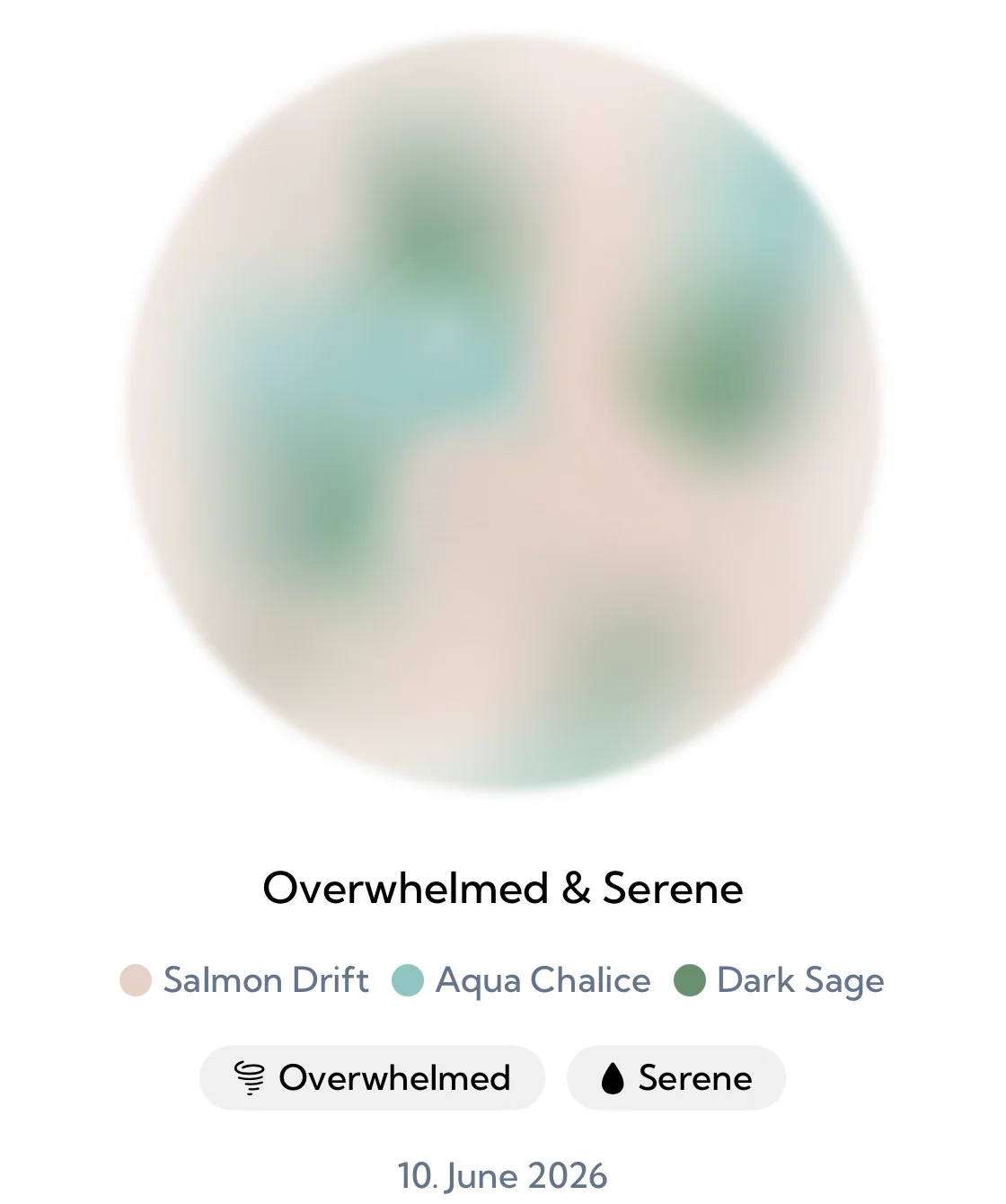
With mixed feelings, try this:
- Name each feeling separately. Run the three steps twice rather than hunting for one word that covers both.
- Rate each one. "Overwhelmed 4, serene 2" tells a different story from the reverse.
- Give each its own why. The two feelings often point at different things: overwhelmed by work, serene at home.
- Notice which is on top. Sometimes one feeling is loud and the quieter one underneath is more useful to name.
- Keep the day mixed in your records. Don't average it into "fine". A mixed day logged honestly is easier to understand later, and a year in pixels shows how often those days come around.
How does Aura help you put a mood into words?
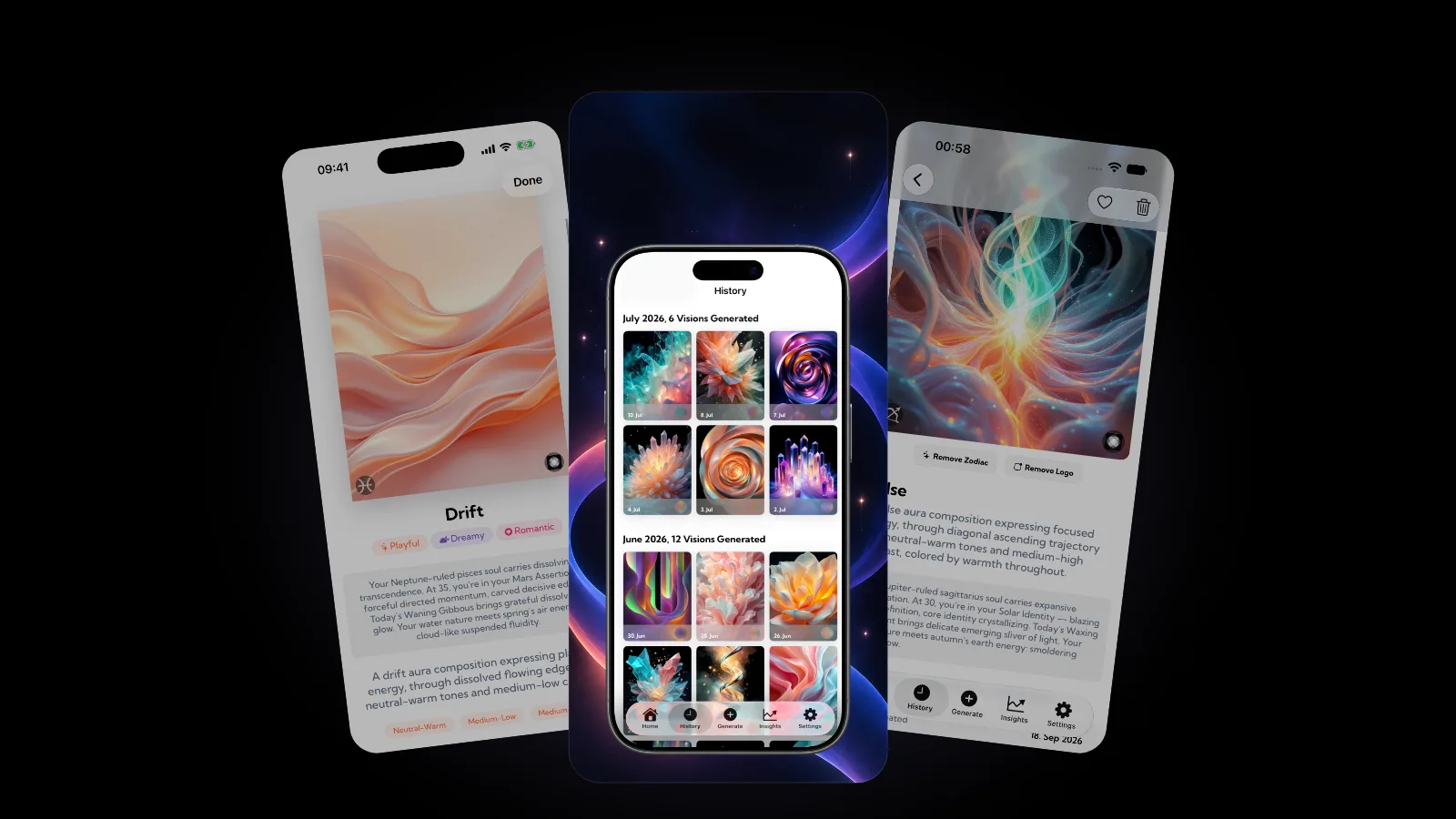
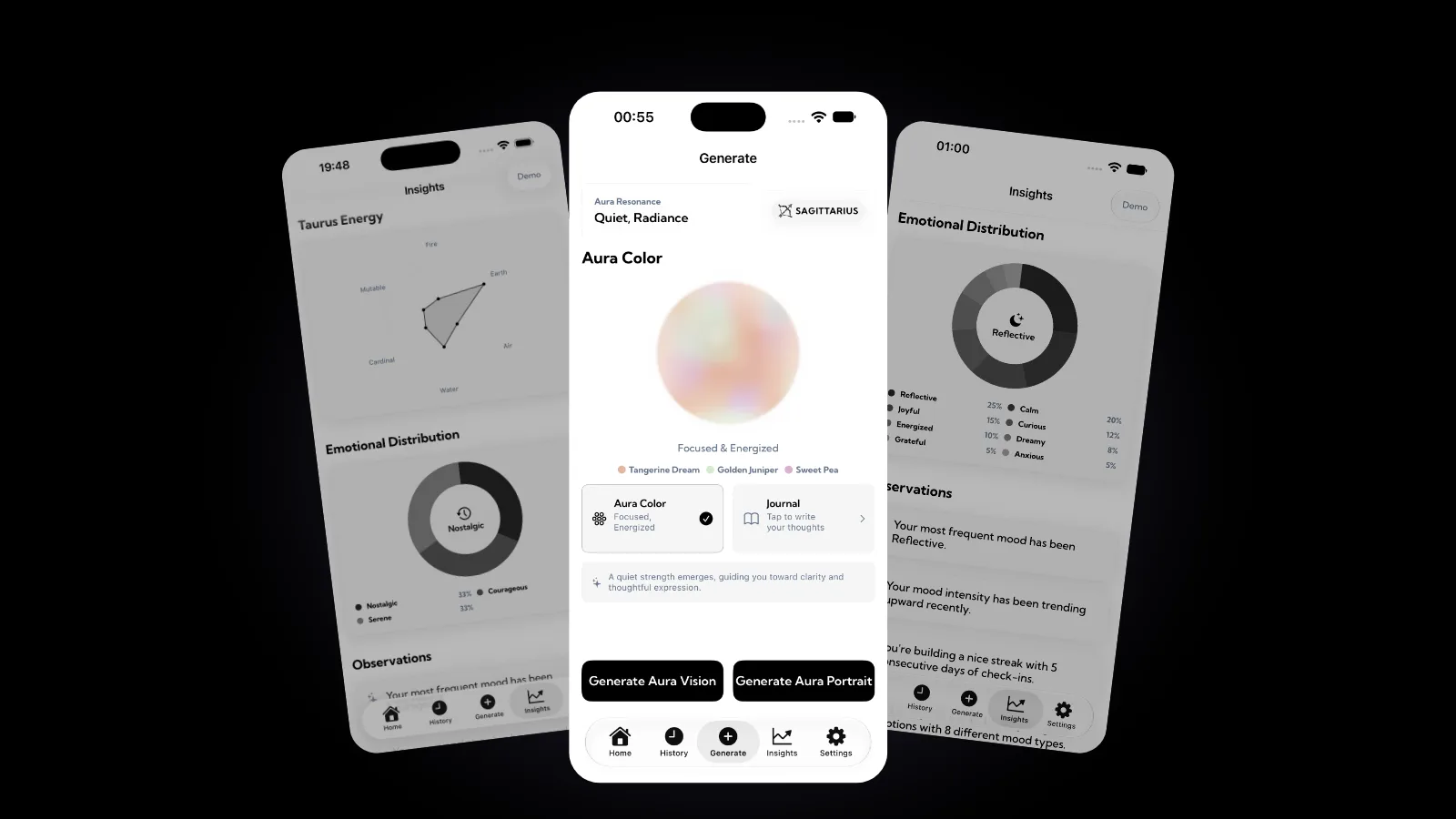
In Aura, each check-in is a small version of the three steps. You choose from 28 moods, pick up to three at once and add a journal entry to capture the moment. The journal entry is the place for your why, and for any word the mood list doesn't have.
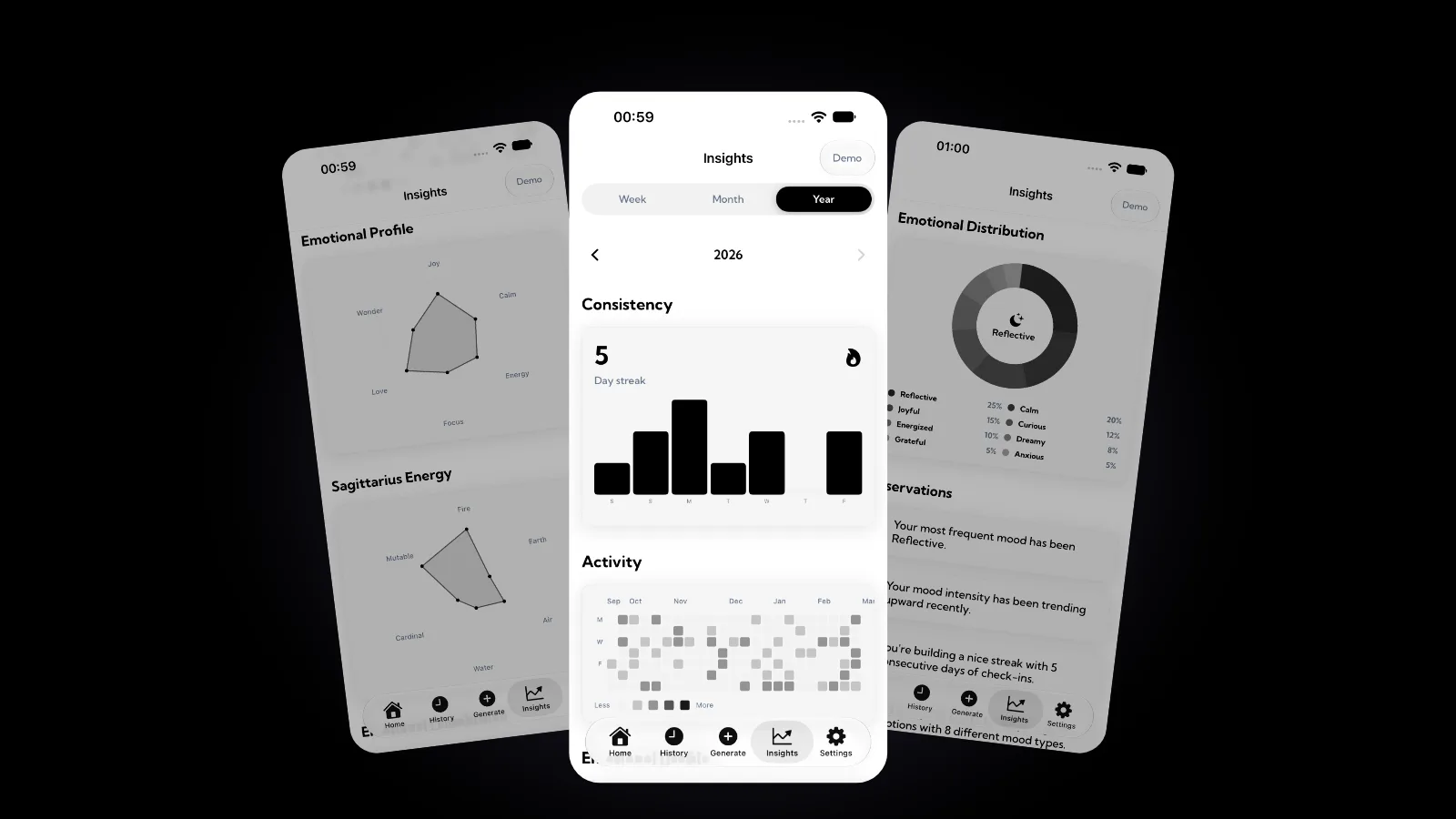
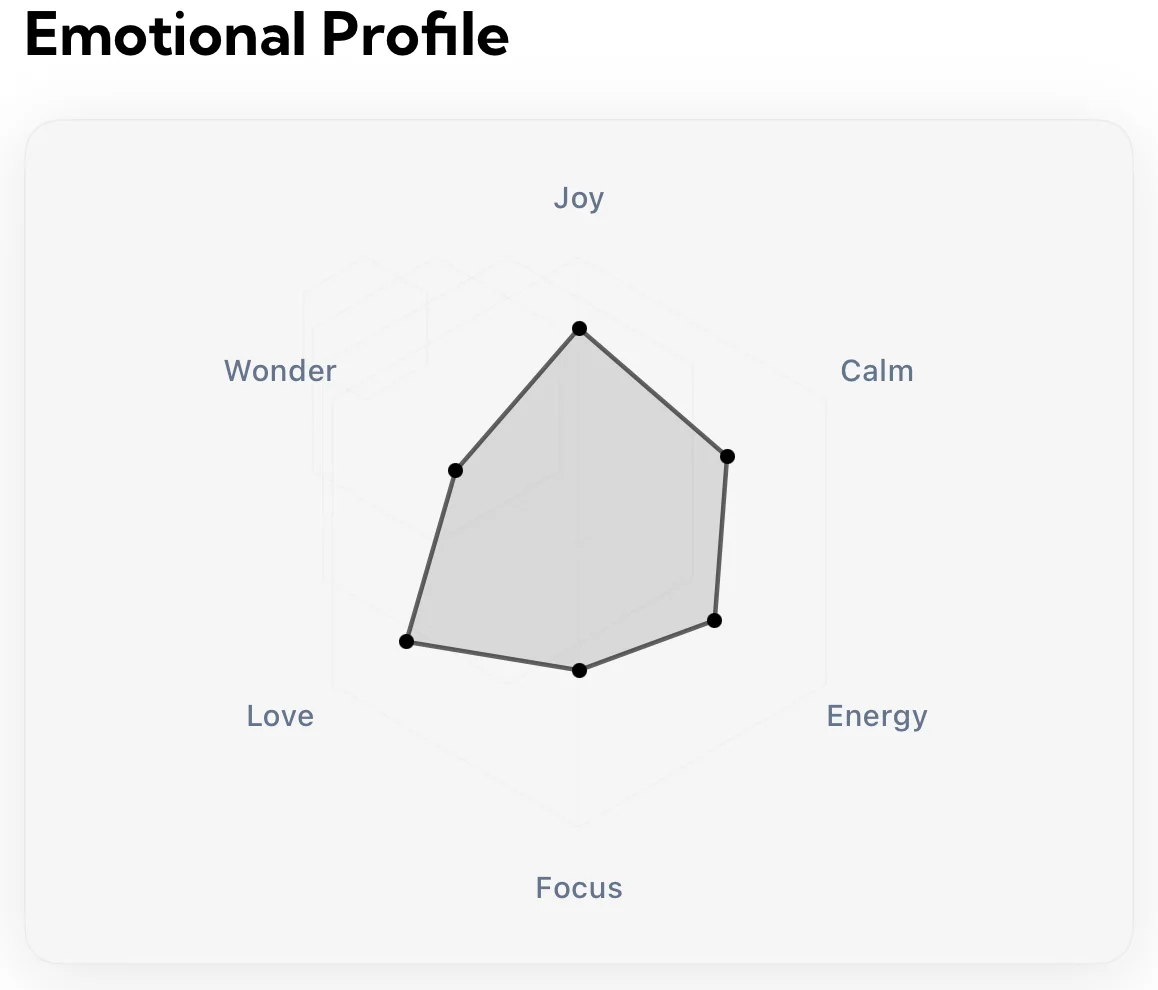
Over time, Aura's Insights turn those check-ins into charts: an Emotional Profile radar across Joy, Calm, Energy, Focus, Love and Wonder, an Emotional Distribution donut of the moods you log, and observations such as your most frequent mood.
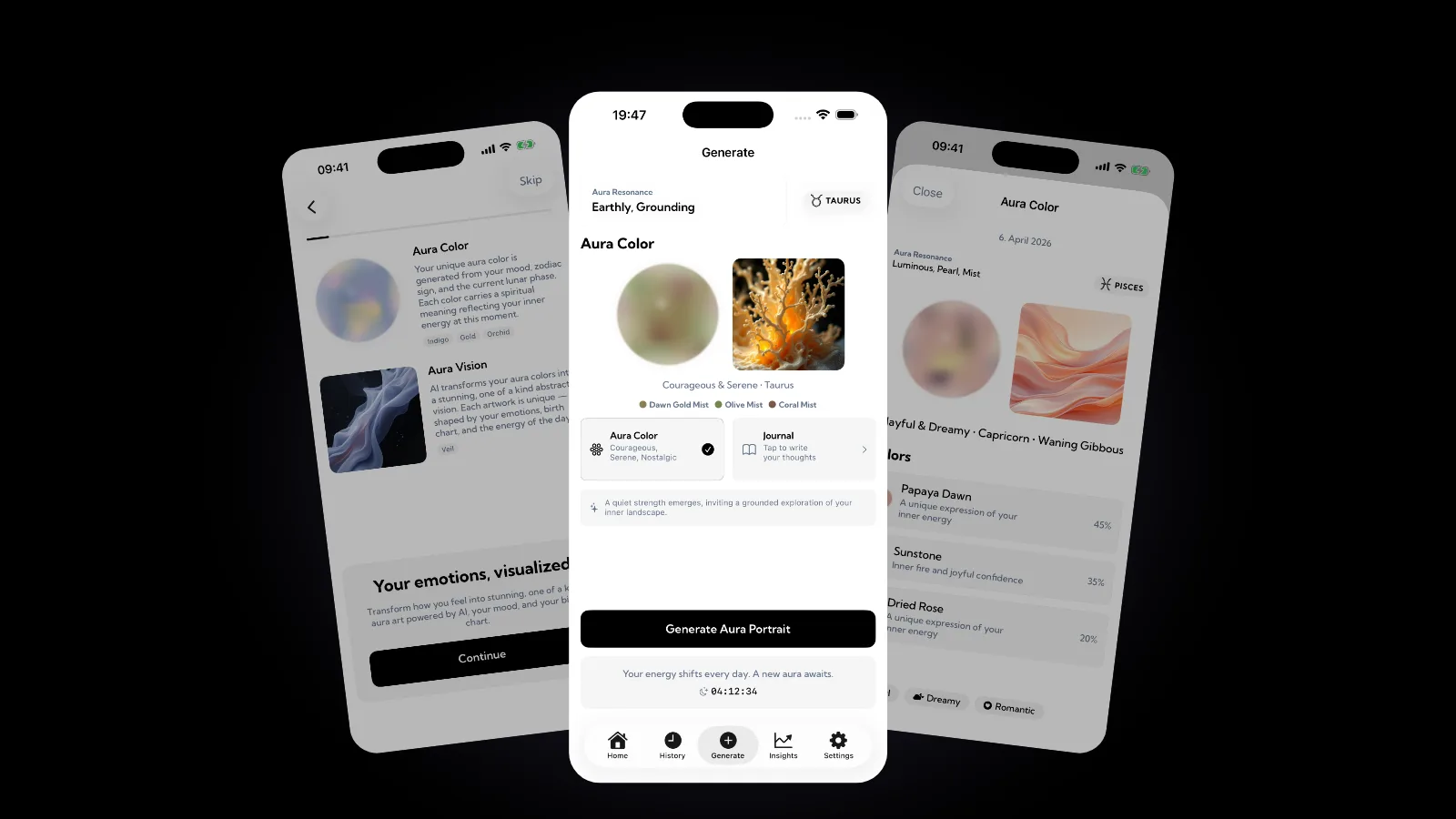
No account is needed, your mood history and journal are stored on your device, and your data is never sold. Aura runs on iPhone with iOS 18.6 or later, in 32 languages. It's free to download, and the optional Aura Pro subscription includes the daily aura color, Aura Vision art, Aura Portraits and complete Aura Zodiac readings.
The aura color is a symbolic layer, explained in our guide to aura colors meaning. If you enjoy astrology, our moon sign meaning guide covers the tradition that links the moon with emotions. Both are tradition and symbolism, not science. More guides live in the Aura category of our blog.
FAQ
What are the six core emotions on the feelings wheel?
On Gloria Willcox's 1982 Feeling Wheel, the six core feelings are mad, sad, scared, joyful, powerful and peaceful. Plutchik's wheel uses a different set: eight basic emotions in pairs, namely joy and sadness, trust and disgust, fear and anger, surprise and anticipation.
Is the emotion wheel used in therapy?
The Feeling Wheel first appeared in the Transactional Analysis Journal, a journal of a school of psychotherapy, as a tool for expanding awareness of emotions. It can support therapy, but on its own it is a reflection tool, not a diagnosis. If strong feelings last for weeks, talk to a doctor.
How many emotions are there?
There is no single agreed number. Plutchik's model starts from eight basic emotions, Willcox's wheel from six core feelings, and both branch into dozens of more specific words. Aura offers 28 moods.
Can you feel two emotions at once?
Yes. Mixed feelings are normal, and Plutchik's model includes blends of two emotions, called dyads. Name each feeling separately, rate each one and give each its own reason. In Aura you can pick up to three moods for a single check-in.
Get started
Tonight, try the three steps once: core feeling, a more specific word, then why. If you'd like a mood journal that keeps those words for you, Aura is free to download on the App Store, with an optional Aura Pro subscription.